What is Pick and Pack? How It Works and Why Accuracy Matters
Published
Did you know that pick and pack accuracy can directly affect your profits?
Between a customer clicking "buy" and the parcel landing on their doorstep, there's a process that most business owners never think about.
And that process is pick and pack.
Get it right, and your customers receive exactly what they ordered, on time, every time.
Your reviews are glowing. Your repeat purchase rate climbs. Your brand builds trust without you having to do anything extra.
Get it wrong, and you may receive negative reviews that take months to recover from.
In this guide, we're going to explain exactly what pick and pack is, how the process works, the four picking methods that separate the average from winning ones, and why accuracy is the foundation of customer experience.
Let's start from the beginning.
What Is Pick and Pack Fulfilment?
Pick and pack is the process of retrieving individual items from warehouse storage (picking) and preparing them for dispatch in their final packaging (packing), ready to be handed to a courier for delivery to the end customer.
In practice, at volume, it is one of the most demanding parts of the entire fulfilment chain.
Every time a customer places an order on your website, that order triggers a pick and pack process.
The right item needs to be located in the warehouse, retrieved accurately, packaged correctly, labelled, and dispatched.
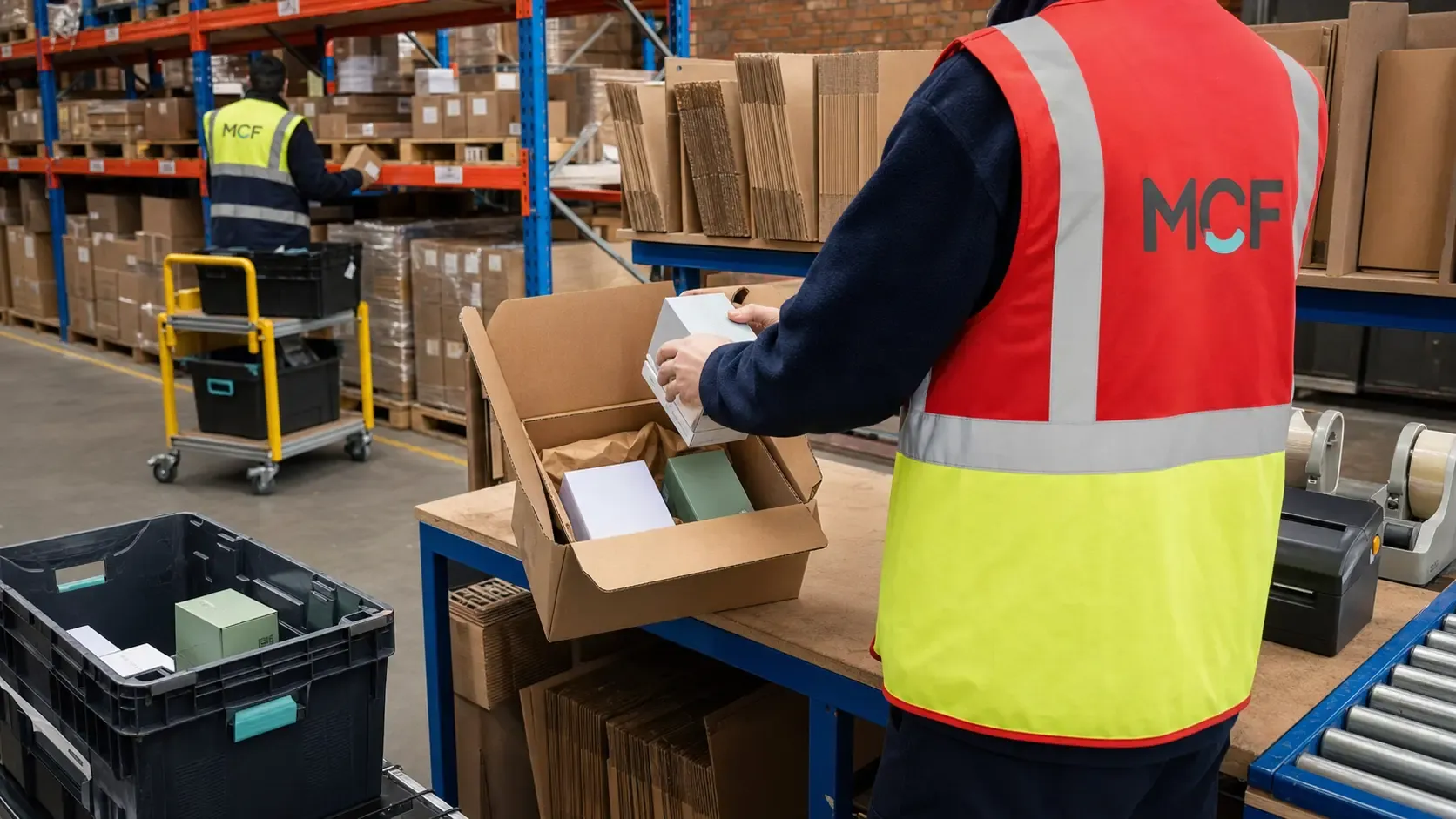
Do that once, no problem. Do that hundreds or thousands of times a day, across dozens of different SKUs, and the complexity multiplies quickly.
This is why businesses turn to professional pick and pack fulfilment services rather than managing it in-house.
A specialist pick and pack warehouse has the infrastructure, technology, and trained teams to handle that volume accurately and efficiently without the overhead costs of doing it yourself.
At its core, pick and pack is about speed and accuracy. The best operations deliver both, at scale.
What Happens Inside a Pick and Pack Warehouse?
Let's walk through the process step by step.
1. Inbound and Inventory Management
Before a single item can be picked, it needs to be received and logged.
When your stock arrives at the fulfilment centre, it's checked, counted, and entered into the Warehouse Management System.
Every SKU is given a location in the warehouse. Every unit is tracked.
Inaccurate inventory data at this point creates a ripple effect of errors downstream.
If the system thinks you have 50 units of a product when you actually have 43, you'll be selling stock you don't have. That means cancelled orders and unhappy customers.
A clean, accurate inbound process is the invisible foundation of a high-performing pick and pack operation.
2. Order Received and Processed
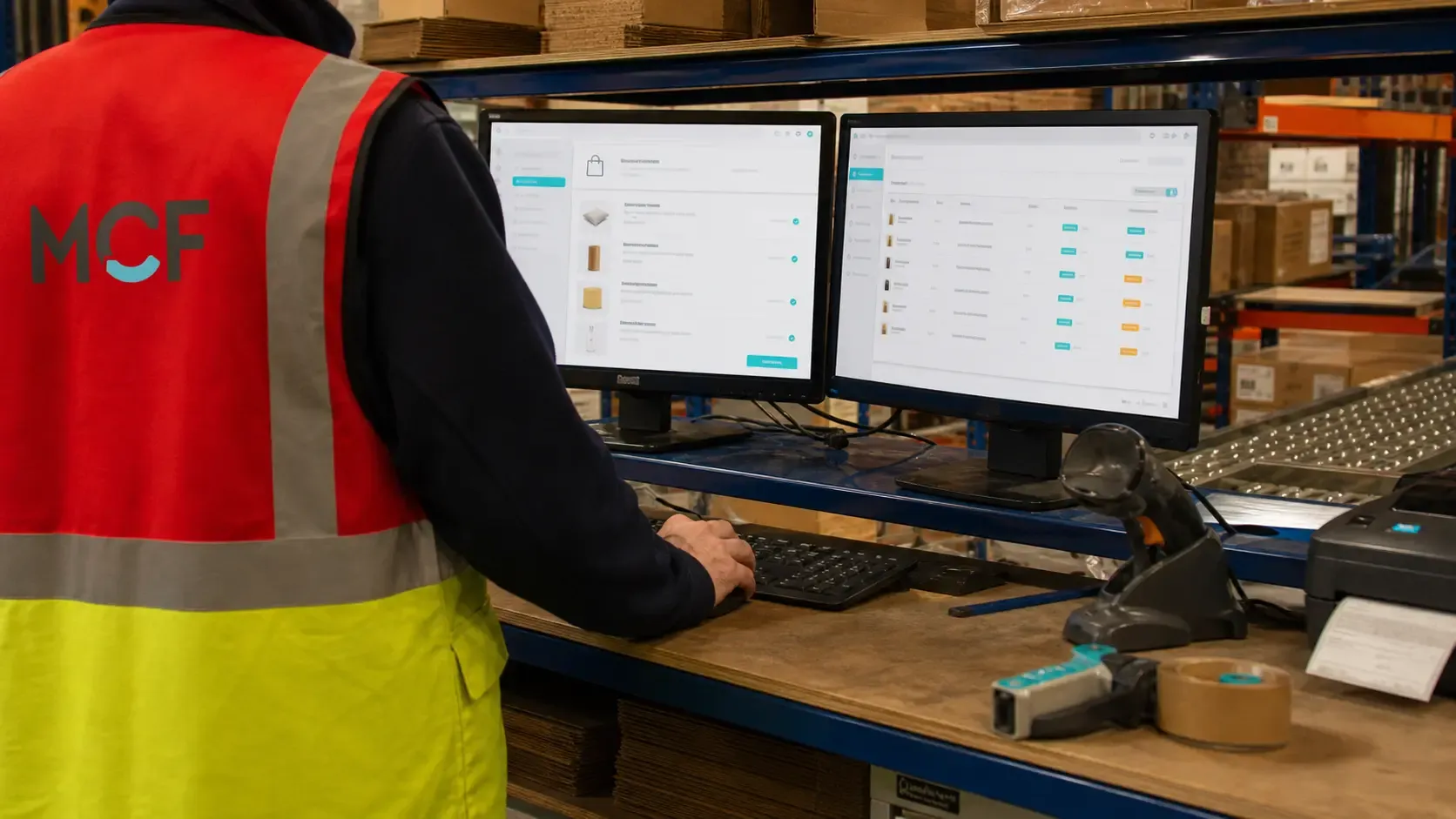
A customer places an order. Your eCommerce platform communicates with the warehouse management system instantly. The order is confirmed, allocated against available stock, and queued for picking.
In a modern pick and pack fulfilment operation, this happens automatically.
3. Picking
This is the physical retrieval of the ordered items from their warehouse locations.
The picker receives the order details and moves through the warehouse to collect the items.
At scale, with hundreds of orders and thousands of SKU locations, it requires advanced software and smart operational methods to do accurately and efficiently.
We'll come back to the four picking methods shortly.
They're the part of this process most often misunderstood, and the biggest differentiator between a mediocre fulfilment operation and an exceptional one.
4. Packing
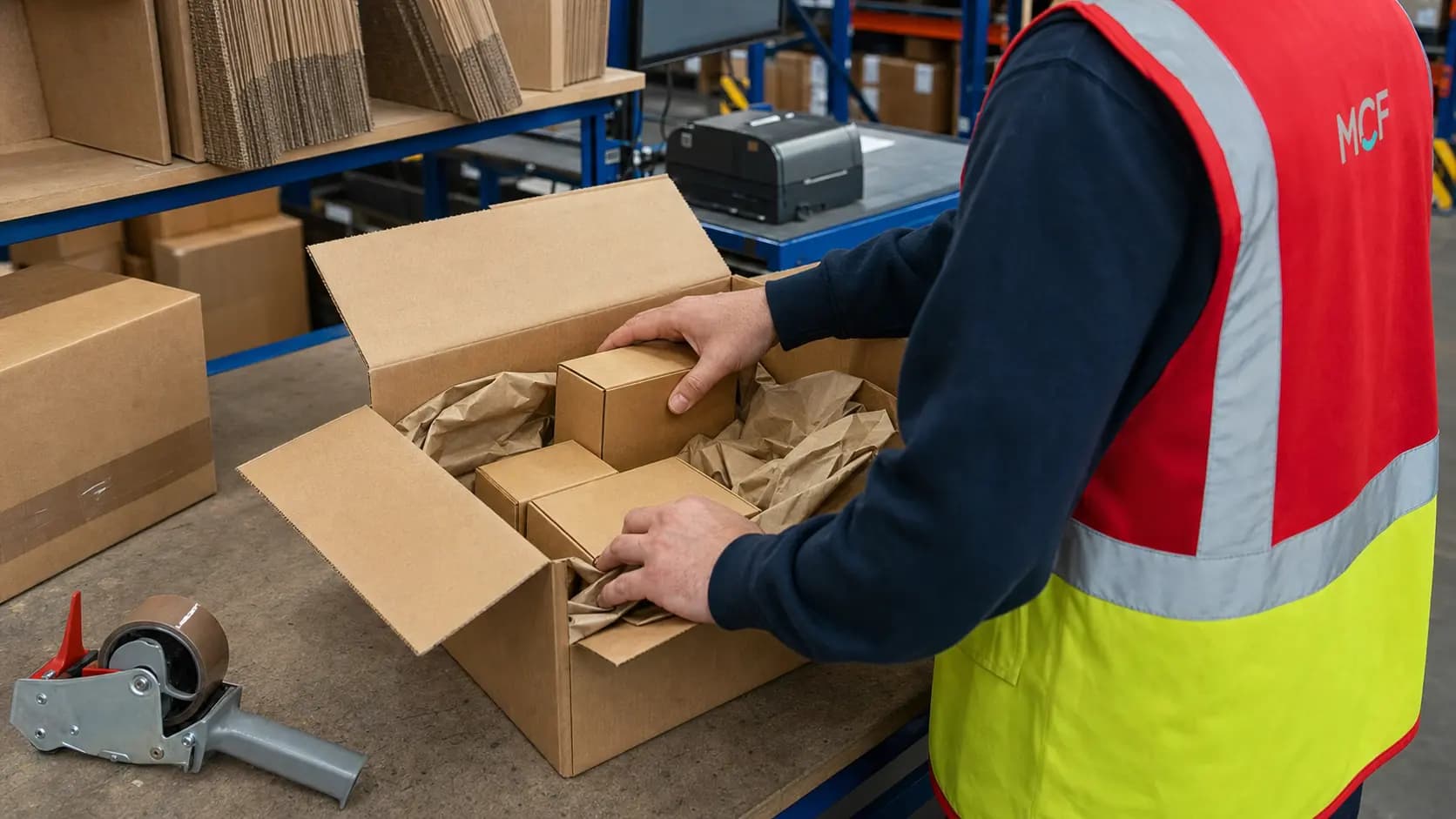
Once the items are picked, they move to the packing station.
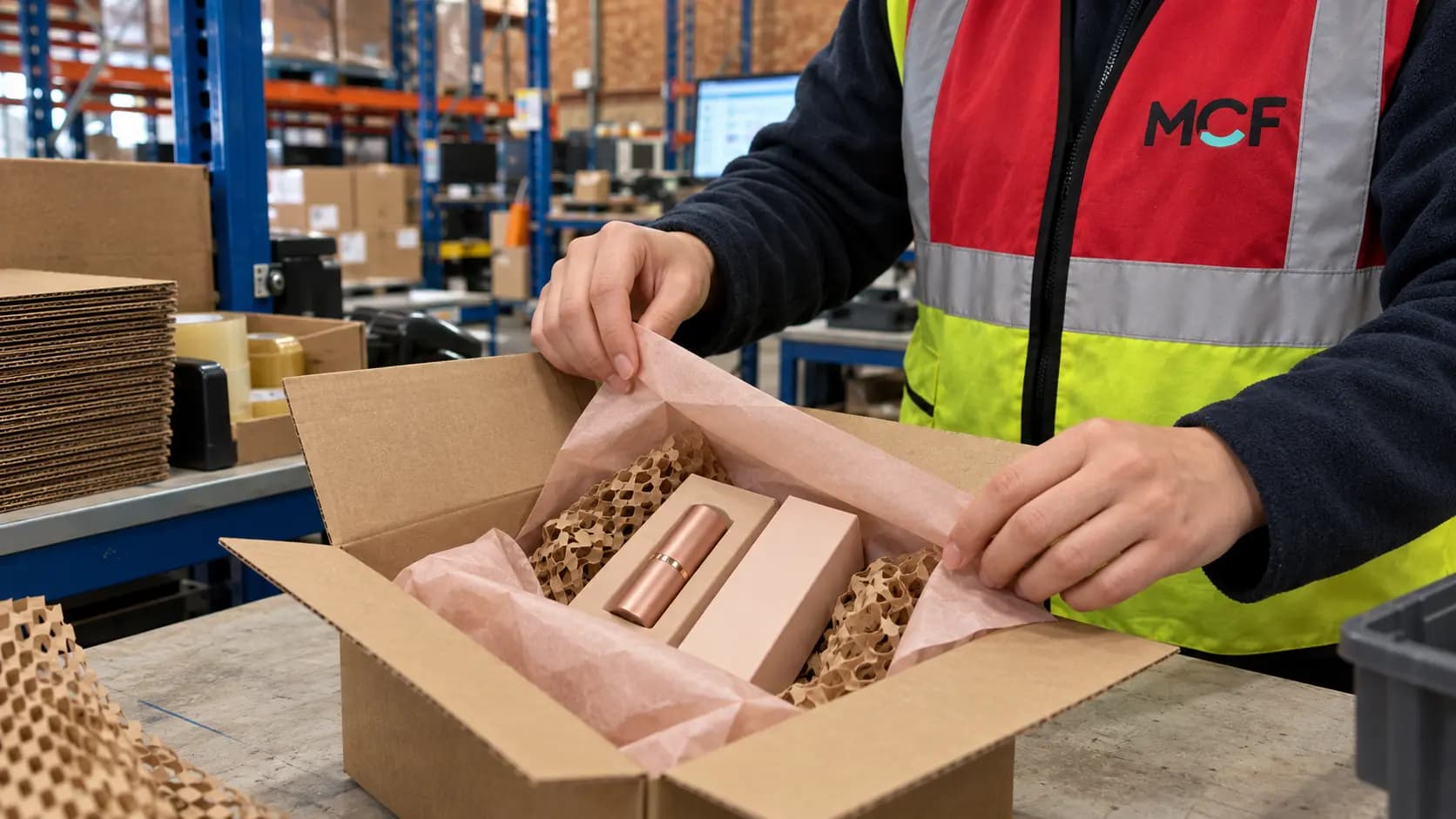
Here, items are packaged using materials appropriate to their size, weight, and fragility.
Good packing decisions reduce damage in transit, minimise void fill waste, and keep dimensional weight as low as possible.
Packing is also where your brand experience lives. Plain, functional packaging is perfectly appropriate for many businesses.
But if you want branded boxes, tissue paper, inserts, or custom packaging that makes the unboxing moment something your customers want to share, this is where that happens.
5. Labelling and Dispatch
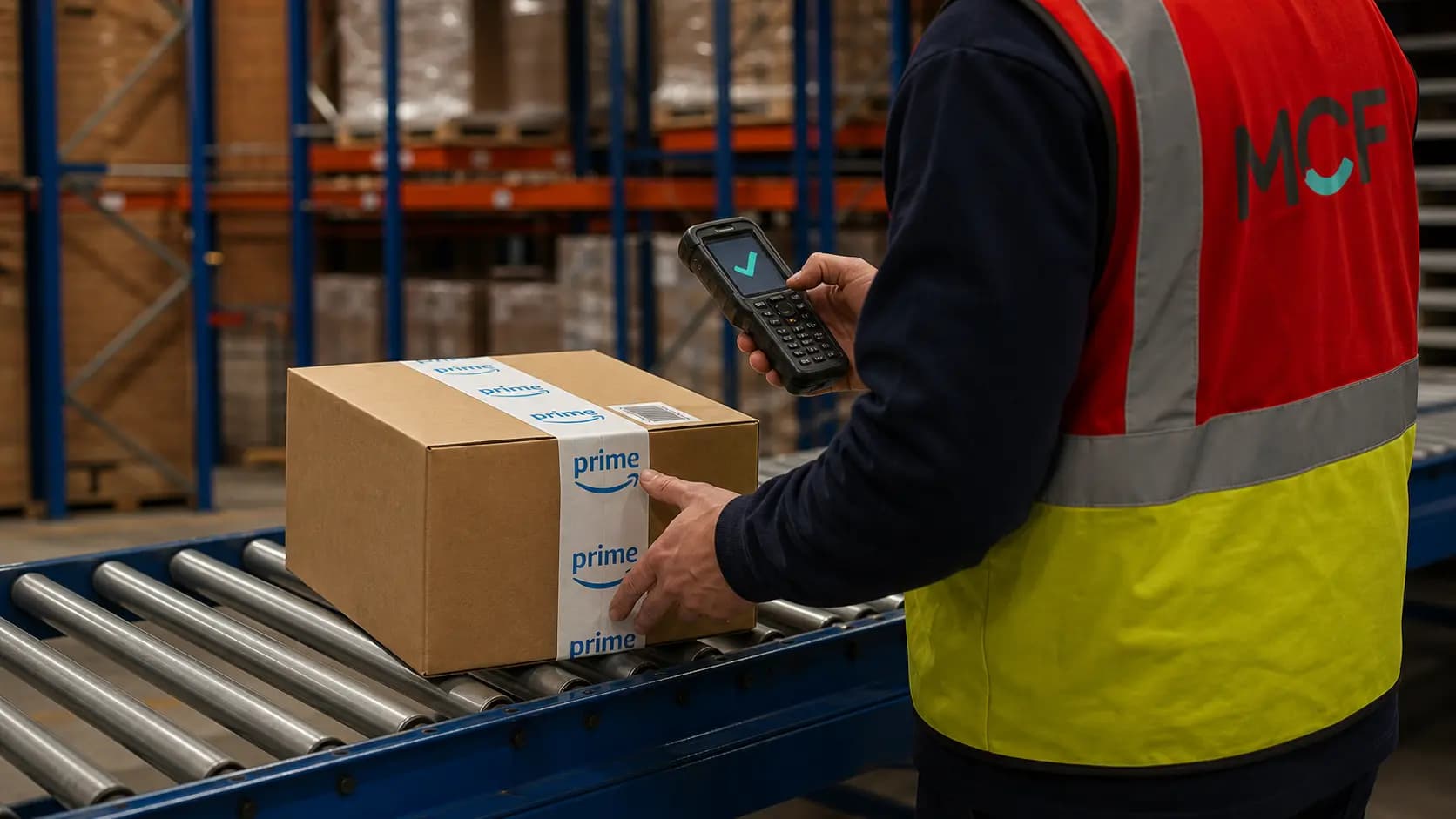
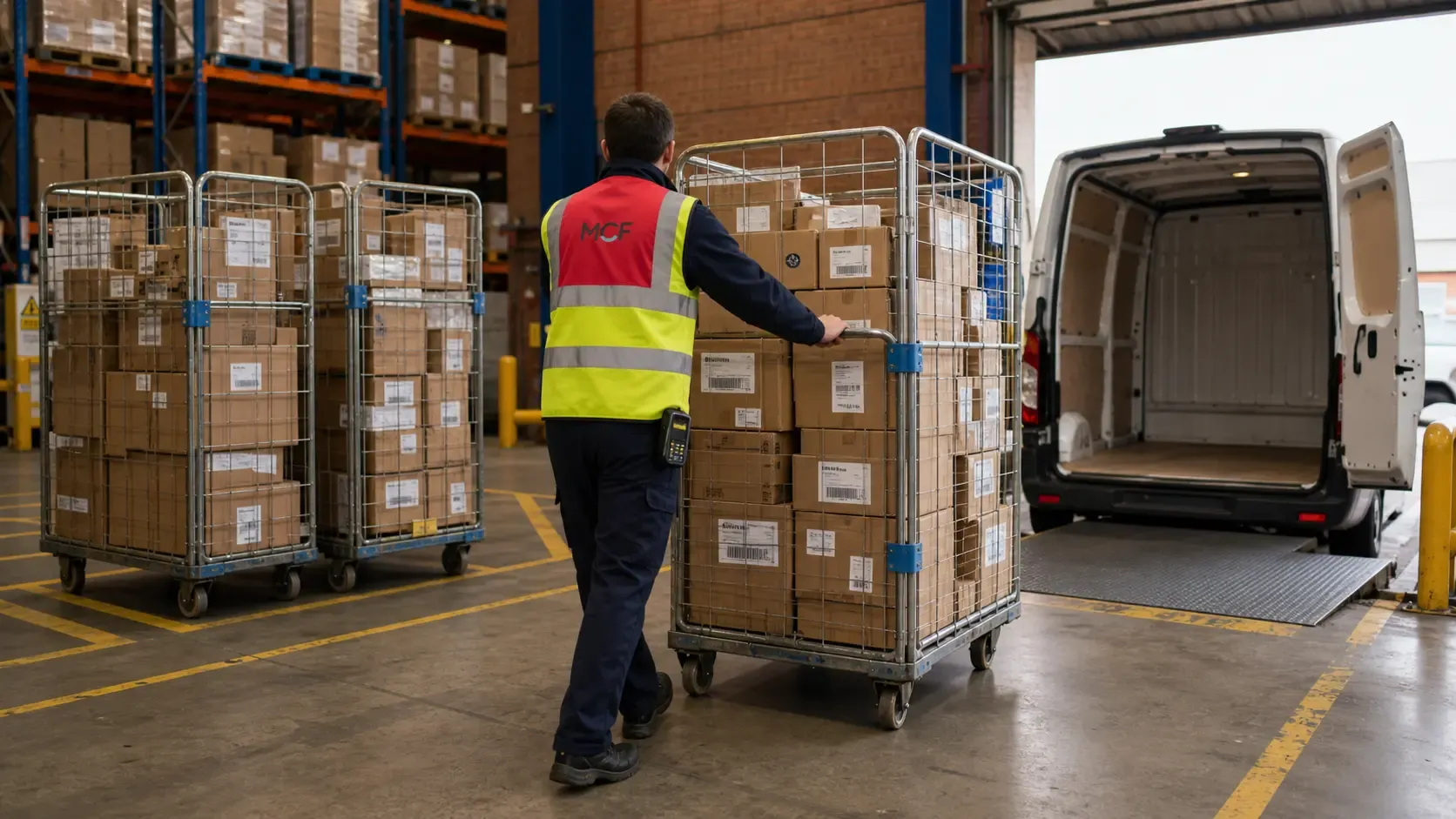
The packed order is labelled with the shipping details and handed over to the courier.
At this stage, a professional pick and pack partner adds significant commercial value. The volume of orders they process across all their clients gives them negotiating leverage with couriers, meaning you benefit from bulk shipping rates you couldn't access alone.
The right courier, the right service level, the right rate. Every time.
The Four Picking Methods, and Why They Matter
This is where good content on pick and pack stops, and where we're going to keep going.
Most guides describe picking as a single, uniform activity. It isn't.
There are four distinct picking methods used in professional warehouses, and choosing the right one has a direct and measurable impact on efficiency, accuracy, and cost.
1. Piece Picking (Discrete Picking)
This is the most straightforward method. One picker handles one order at a time, moving through the warehouse to collect all the items in that order before returning to pack.
It's simple to manage and easy to train staff on.
For low-order volumes and businesses getting started with outsourced fulfilment, it works well. Accuracy is naturally high because each pick is directly tied to a single order.
The limitation becomes apparent at scale. If you're processing hundreds of orders a day, sending individual pickers on individual journeys for each one is highly inefficient.
Piece picking is the right method when order volumes are moderate or when orders contain multiple items that require careful attention, like bespoke or fragile products.
2. Batch Picking
Batch picking is where efficiency starts to compound.
Instead of picking one order at a time, a single picker collects items for multiple orders in a single warehouse journey.
They might pick for ten, twenty, or fifty orders in one run, collecting all the units needed across that batch in an efficient sweep of the warehouse, then returning to sort and pack them into individual orders.
The key gain is travel time reduction. A picker walking the same route once to fulfil twenty orders uses a fraction of the time of twenty individual trips.
In a high-volume operation, that efficiency is transformative.
Batch picking requires more sophisticated software to manage the system, which needs to intelligently group orders by shared SKU locations, calculate optimal routes, and ensure nothing gets mixed up during sorting.
When it's done well, batch picking dramatically increases throughput without sacrificing accuracy. This is the method that powers high-volume eCommerce fulfilment.
3. Zone Picking
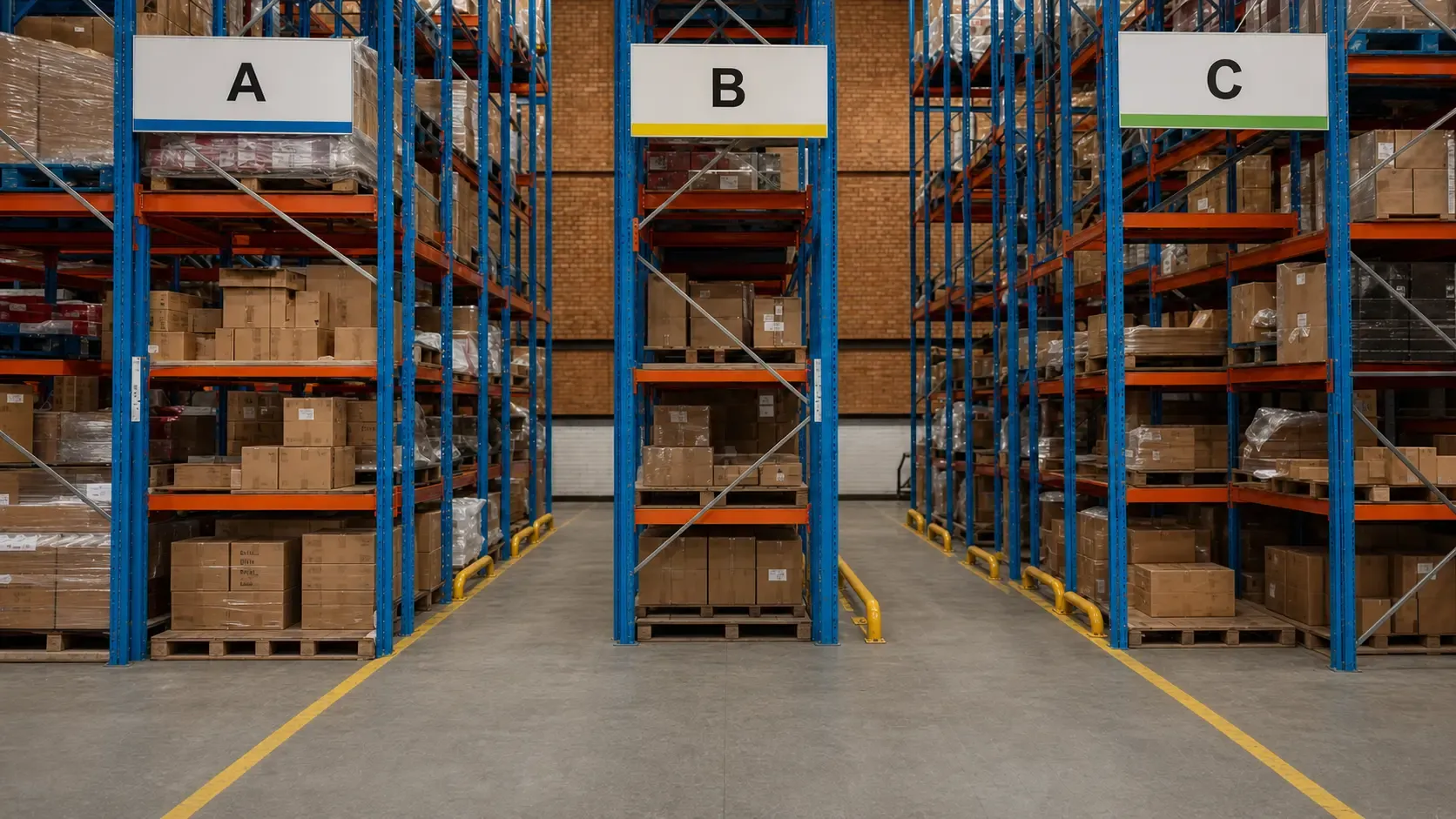
In a zone picking operation, the warehouse is divided into distinct areas, and each picker is responsible for their zone only.
An order that includes items from multiple zones is processed in stages.
As the order tote moves through each zone, the relevant items are added.
By the time it reaches the packing station, the complete order has been assembled across multiple zones without any single picker needing to traverse the entire warehouse.
Zone picking is particularly effective in large warehouses with wide product ranges.
It reduces congestion on the warehouse floor, enables pickers to become highly expert in their specific zone and the products within it, and keeps travel distances short for every individual involved.
The coordination requirement increases, but in the right environment zone picking is one of the most scalable methods available.
4. Wave Picking
Wave picking is the most sophisticated method used by the highest-performing fulfilment operations.
It combines elements of both batch and zone picking. Orders are grouped into "waves" based on factors like courier collection times, order priority, product location, and warehouse workload.
Rather than processing orders as they arrive, wave picking plans and releases work in carefully timed batches that optimise the entire warehouse operation simultaneously.
The result is maximum throughput, minimum congestion, and the most efficient use of both people and space at any given moment.
Wave picking requires real investment in technology and operational planning.
But for businesses processing significant volumes, it's the method that makes the difference between a warehouse that's barely keeping up and one that's running like a precision instrument.
The right pick and pack partner assesses your order profile, volume, and product mix and uses the method that delivers the best outcome for your specific operation.
How Barcode Scanning Improves Pick and Pack Accuracy
Accuracy is everything.
A wrong item in a customer's parcel costs you that customer's trust.
And in an era where a dissatisfied buyer can leave a one-star review in sixty seconds, protecting your accuracy rate protects your reputation.
This is where barcode scanning technology is non-negotiable in any professional pick and pack operation.
Here's how it works in practice.
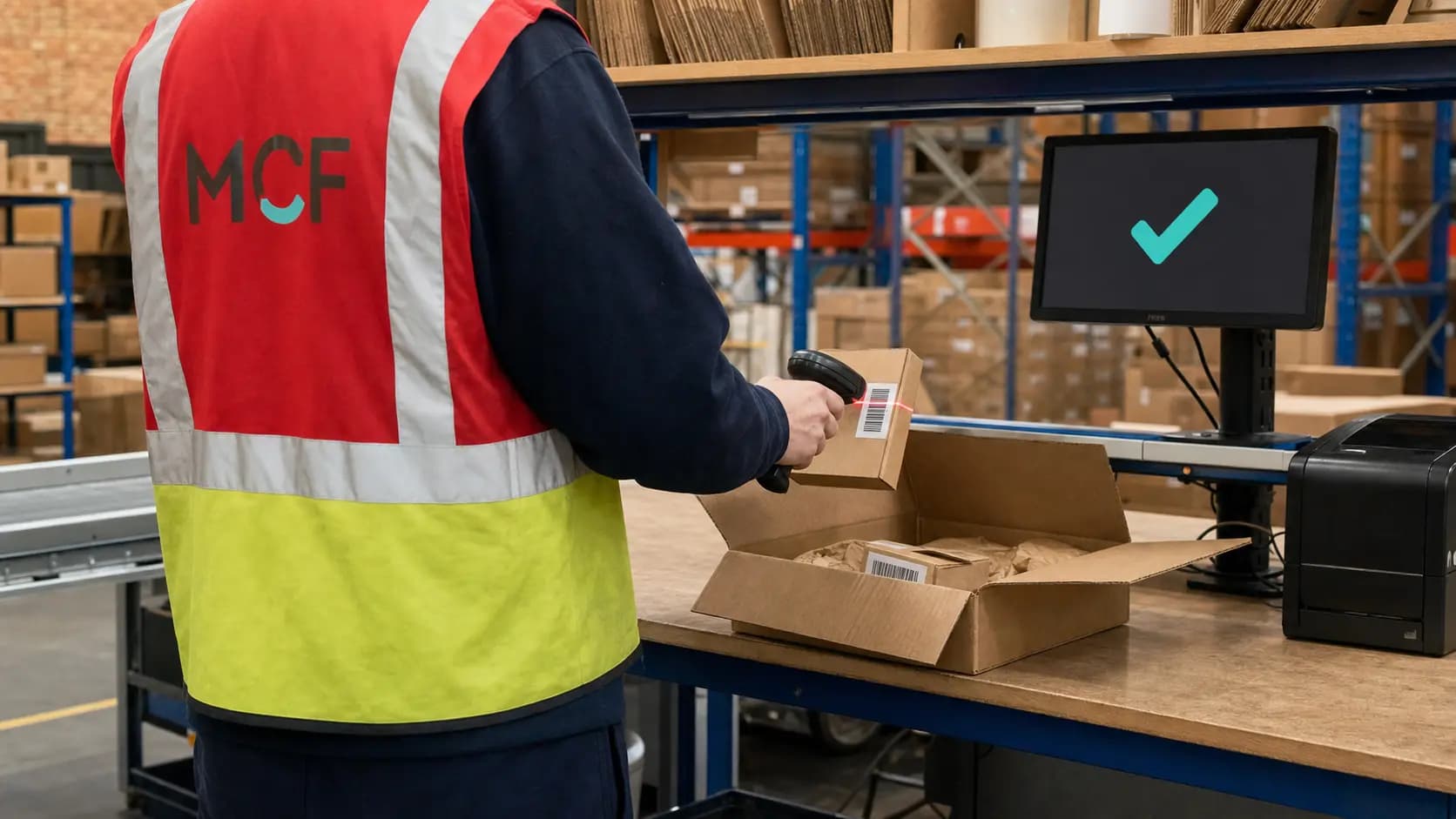
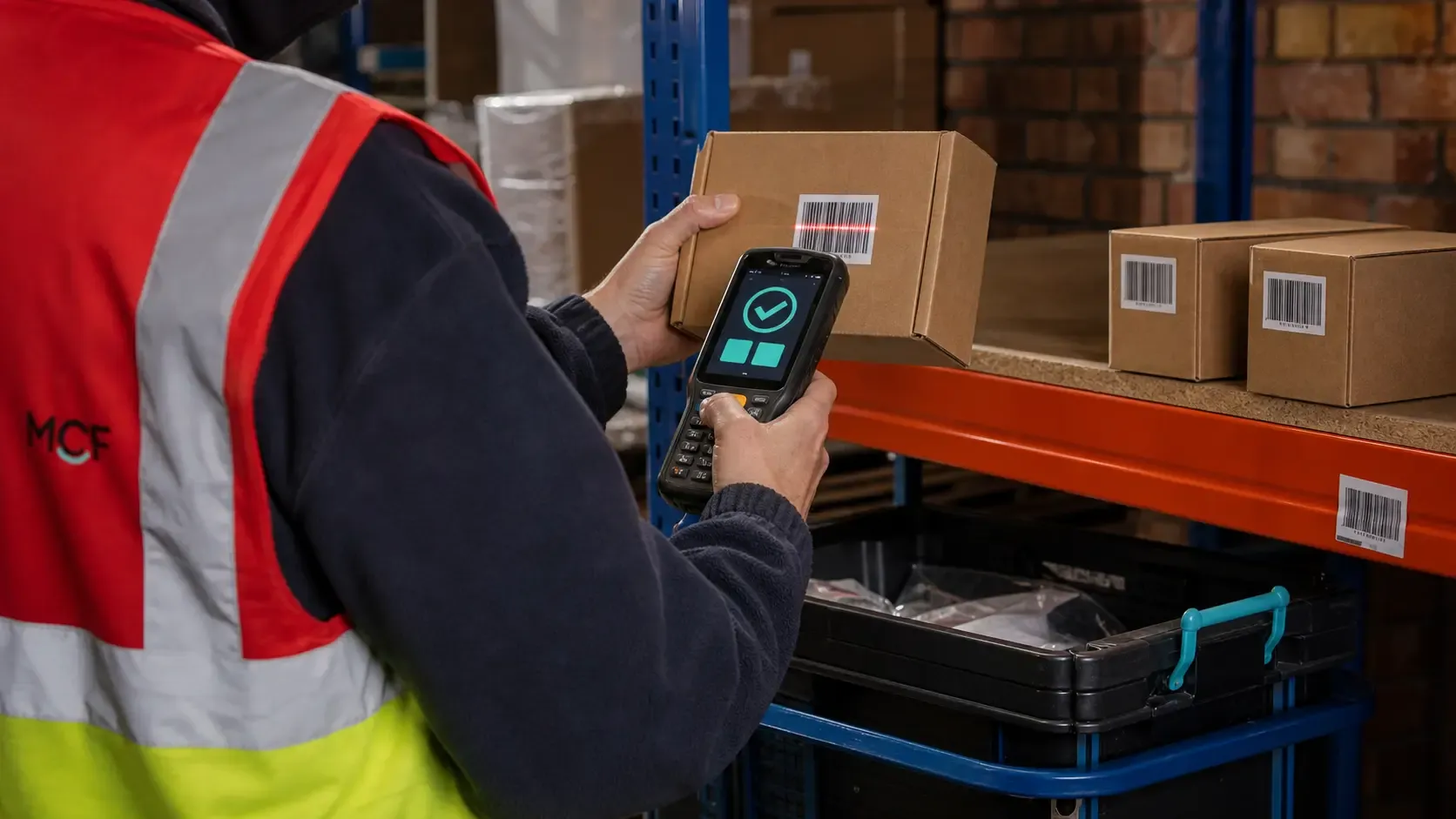
When a picker retrieves an item, they scan its barcode. The WMS immediately verifies that the scanned item matches the order requirement.
If it matches, the process continues. If it doesn't, the system flags the error instantly, before the wrong product ever reaches a packing station.
This verification happens at every stage of the pick and pack process.
The cumulative effect of these checkpoints is an accuracy rate that manual processes simply cannot match.
At MCF, our barcode scanning and verification processes consistently deliver a 99% pick and pack accuracy rate.
But what does that mean in practice? If you're shipping 1,000 orders a month, only ten will ever have an issue.
At 5,000 orders a month, fifty - and our team will catch the vast majority of those before they ever leave the building.
Compare that to an in-house operation relying on manual checking, and the difference is stark.
Human error rates in manual picking typically run at 1 to 3%. And at volume, that's a lot of unhappy customers.
Technology is the baseline for any pick and pack operation that takes its clients' businesses seriously.
How Much Does Pick and Pack Cost?
Let's talk numbers because this question comes up in every conversation we have with business owners exploring their fulfilment options.
Pricing in the pick and pack fulfilment services market varies significantly depending on the provider, volume, complexity of your products, and the level of service.
Here's a realistic guide to what you should expect.
In the UK market, per-item pick and pack fees typically range from 80p to £2.50 per order line.
That's a wide range, and the differences reflect the level of technology, accuracy rates, quality of packing, and the operational power of the provider.
At the lower end of that range, you're likely dealing with a less automated, lower-tech operation where accuracy rates may be harder to verify and service levels less consistent.
At the upper end, you're paying for technology-driven accuracy, sophisticated picking methods, branded packaging capability, seamless eCommerce integrations, and a team that treats your brand as if it were their own.
Beyond the per-item fee, a typical pick and pack pricing structure includes storage fees (usually charged per pallet, per shelf, or per cubic metre per week), a receiving fee for inbound stock, and outbound shipping costs.
But a good fulfilment partner will have negotiated courier rates that make the shipping element significantly more competitive than you could achieve alone.
When you add all of that up, professional pick and pack fulfilment is frequently less expensive than it first appears - and almost always more efficient.
If you'd like a clear, transparent quote for your specific volume and product type, MCF offers a FREE, no-obligation pricing consultation.
What Does a Pick Packer Do?
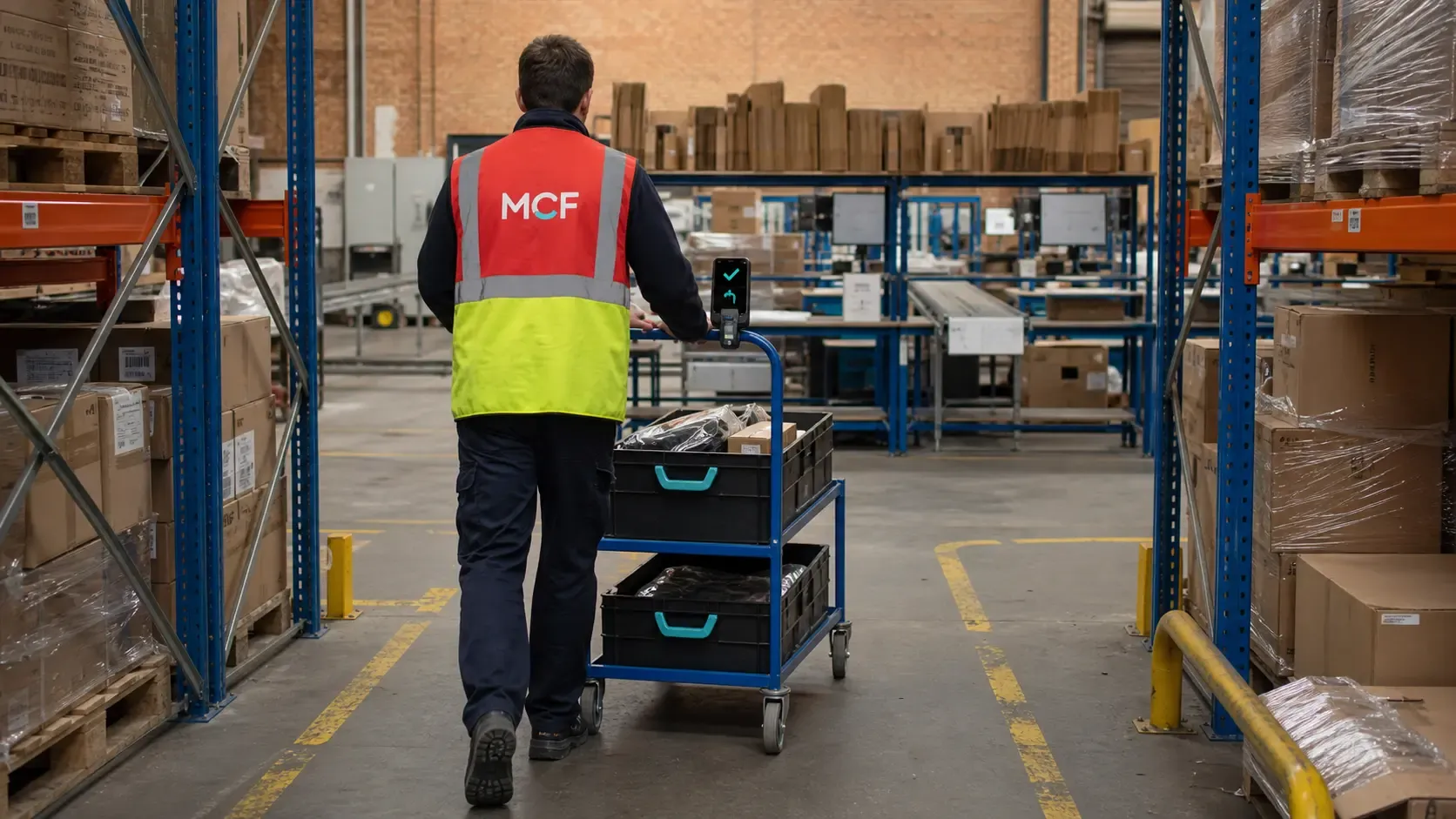
A pick packer is the person responsible for physically retrieving items from warehouse storage and preparing them for dispatch.
In a professional pick and pack warehouse, their day involves working through a queue of orders, collecting the specified items from their storage locations, verifying each pick with a barcode scan, and delivering items to a packing station where the order is packaged, labelled, and prepared for courier collection.
Good packers are fast and accurate.
In a high-performing operation, they're supported by technology that removes the cognitive burden of memorising locations or manually checking order details.
The system guides every step, leaving them free to focus on moving efficiently and handling products carefully.
The best pick packers take genuine pride in the quality of what leaves the building. Because every parcel they pack carries a brand's name.
Why Accuracy Matters More Than You Think
We've mentioned the 99% accuracy figure. Let's put that in context.
At 500 orders a month, that's five errors. At 2,000 orders, that's twenty. At 10,000 orders, that's one hundred customers receiving the wrong item every single month.
Each one of those errors costs you money.
And then there's the intangible costs, like the review, the lost customer, the word of mouth that doesn't happen because that customer won't recommend you.
At MCF, accuracy is the metric we're most proud of. It's the one that protects your brand, retains your customers, and saves you money every single month.
Is Pick and Pack Right for Your Business?
If you're processing more than a hundred orders a month and fulfilment is consuming significant time, headcount, or space, pick and pack outsourcing is almost certainly the right move.
And if you want to reduce warehouse overheads and spend more time building the business, that's reason enough.
Ready to Talk Pick and Pack?
Do you want to increase your profits with pick and pack outsourcing?
At MCF, our pick and pack fulfilment services are built for businesses that are serious about growth.
Accurate, fast, flexible - and a customer service team that actually picks up the phone.
Whether you're an SME or a leading retail company, we have the infrastructure to handle it and the expertise to help you scale to new heights.
Get a FREE quote from MCF today and find out what accurate pick and pack fulfilment looks like for your business.