What is eCommerce Fulfilment?
You have built the brand. Nailed the product photography. Mastered the art of the Instagram reel.
Your ads are converting, your checkout flow is seamless, and customers are clicking "buy" at a rate that makes your accountant smile.
But none of that matters if the product does not land on the doorstep.
eCommerce fulfilment is the engine room of online retail.
It is everything that happens between a customer completing their purchase and that electrifying moment when they tear open the packaging.
Get it right, and you have a customer for life. Get it wrong, and you have a one-star review and a refund request.
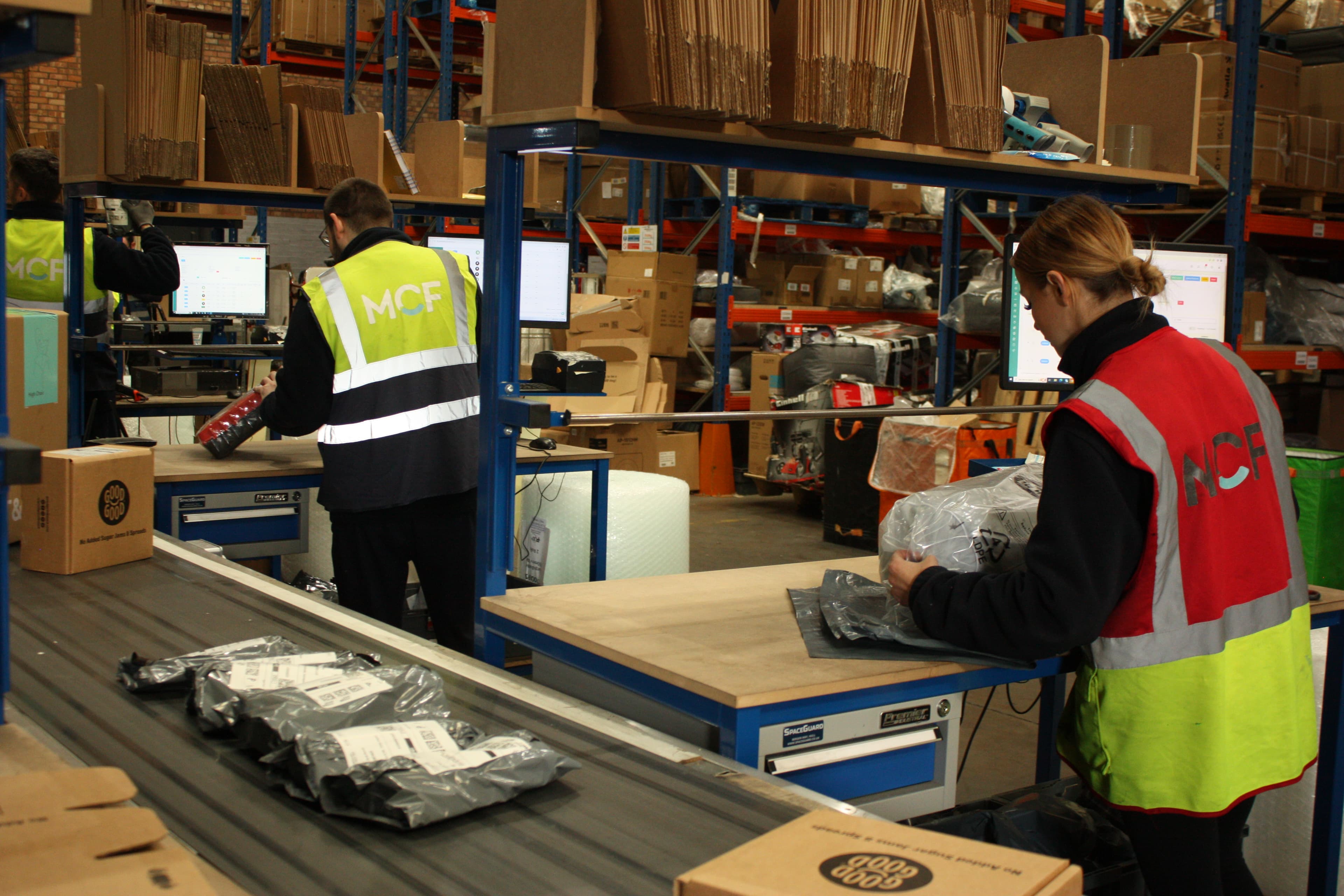
At MCF, our fulfilment centre in Liverpool has spent years perfecting this process for some of the UK's leading retail brands.
We know what separates fulfilment that simply works from fulfilment that actually drives growth. Let's break it down.
What Does eCommerce Fulfilment Actually Mean?
eCommerce fulfilment is the complete process of receiving, processing, packing, and shipping orders to customers who have purchased products online.
But it is a complex choreography of systems, people, and logistics that needs to work flawlessly, often thousands of times a day.
The process typically includes:
- Receiving and storing inventory in a warehouse or fulfilment centre
- Processing orders as they come in from your online store
- Picking products from warehouse shelves
- Packing items securely and efficiently
- Shipping orders via the appropriate courier
- Tracking deliveries and communicating with customers
- Handling returns when things do not go to plan
Each of these stages presents opportunities to delight customers or disappoint them. The brands that win in eCommerce are the ones that treat fulfilment as a competitive advantage, not an afterthought.
Why eCommerce Fulfilment Matters More Than Ever
The expectations game has changed dramatically. A decade ago, a week-long delivery window was perfectly acceptable. Today, customers expect their order within days, sometimes hours, and they want to track every step of the journey.
Speed is now table stakes. Fast delivery is very important. Same-day and next-day delivery options have moved from luxury to baseline expectation, particularly in urban areas. If you cannot compete on delivery speed, you are handing customers to competitors who can.
Accuracy is non-negotiable. Wrong items, missing products, and damaged goods erode trust and generate costly returns.
Transparency builds loyalty. Customers want visibility. They want to know when their order was dispatched, where it is right now, and exactly when it will arrive. Silence creates anxiety, and anxiety creates abandoned carts and refund requests.
The research backs this up. Most customers are willing to pay more for faster delivery, while delayed packages consistently rank as the top frustration in online shopping. Poor fulfilment loses you a customer.
The eCommerce Fulfilment Process: A Complete Breakdown
Understanding each stage of the fulfilment process helps you identify where improvements can be made and where things might be going wrong. Here is what happens from the moment a customer clicks "buy" to the moment they are leaving a five-star review.
1. Receiving Inventory
Before you can ship anything, you need stock in place. The receiving stage is where goods arrive at your fulfilment location, whether that is your own warehouse, a 3PL facility, or even a spare room in your house.
Proper receiving involves:
- Checking shipments against purchase orders for accuracy
- Inspecting goods for damage or quality issues
- Logging inventory into your Warehouse Management System (WMS)
- Labelling and organising products for efficient storage
The receiving stage sets the tone for everything that follows. Sloppy receiving leads to inventory discrepancies, picking errors, and the dreaded "we have sold something we do not actually have" scenario. Top fulfilment operations treat receiving as a critical quality checkpoint.

2. Inventory Storage and Management
Once goods are received, they need a home. How you store inventory directly impacts how quickly and accurately you can fulfil orders.
Strategic placement matters. Fast-moving products should be easily accessible. Seasonal items can sit further back. Products frequently ordered together should be stored nearby to reduce picking time.
Real-time visibility is essential. Your inventory management system needs to reflect reality at all times. When a customer places an order, you need absolute confidence that the product is actually in stock.
Organisation prevents chaos. Clear labelling, logical bin locations, and consistent processes mean pickers can find products quickly without hunting through shelves or making educated guesses.
Poor inventory management creates a cascade of problems: overselling, stockouts, delayed shipments, and frustrated customers.
3. Order Processing
The moment a customer completes checkout, the clock starts ticking. Order processing is where the fulfilment journey officially begins.
Modern order processing involves:
- Order validation to confirm payment and shipping details
- Inventory allocation to reserve stock for the order
- Order routing to the appropriate fulfilment location
- Pick list generation to guide warehouse staff
Speed matters here. The faster an order moves from "placed" to "being picked", the faster it reaches the customer. The best fulfilment operations process orders in near real-time, with automated systems handling the heavy lifting.
Integration is crucial at this stage. Your eCommerce platform, inventory system, and warehouse management software need to communicate seamlessly. Manual data entry creates delays and errors. Automated workflows create efficiency.
4. Picking
Picking is exactly what it sounds like: locating and retrieving the products a customer has ordered from warehouse shelves. It is also one of the most labour-intensive and error-prone stages of fulfilment.
Picking methods vary based on volume and complexity:
- Piece picking involves fulfilling one order at a time
- Batch picking groups multiple orders together for efficiency
- Zone picking assigns pickers to specific warehouse areas
- Wave picking organises picks into scheduled waves throughout the day
Advanced fulfilment centres use technology to optimise this process. Barcode scanning confirms the right product. Software-generated pick paths minimise walking time. Real-time updates flag issues before they become problems.
Picking accuracy directly impacts customer satisfaction. A mispicked order means a disappointed customer, a return to process, and a replacement to ship. The cost of a picking error far exceeds the cost of preventing one.

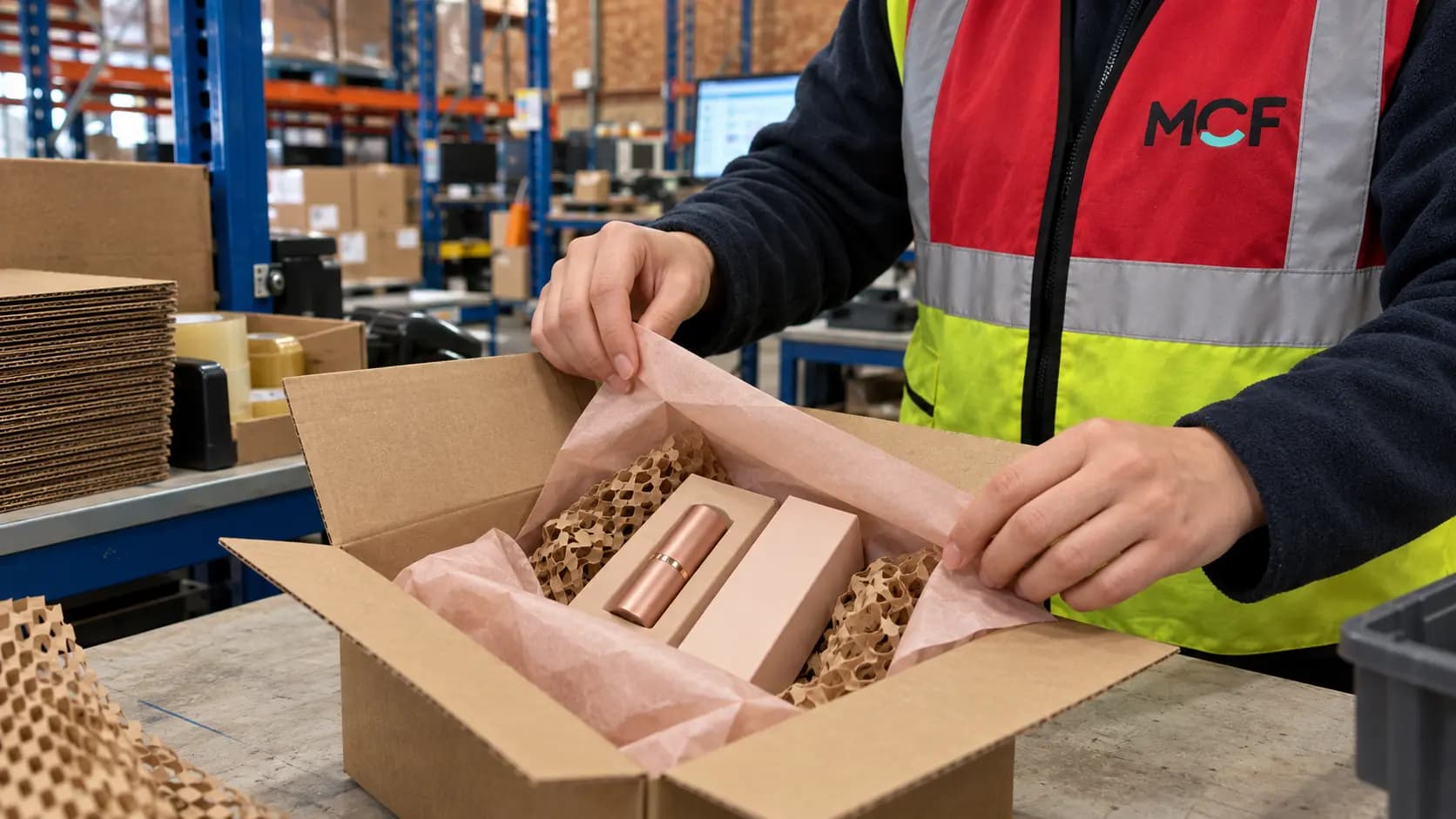
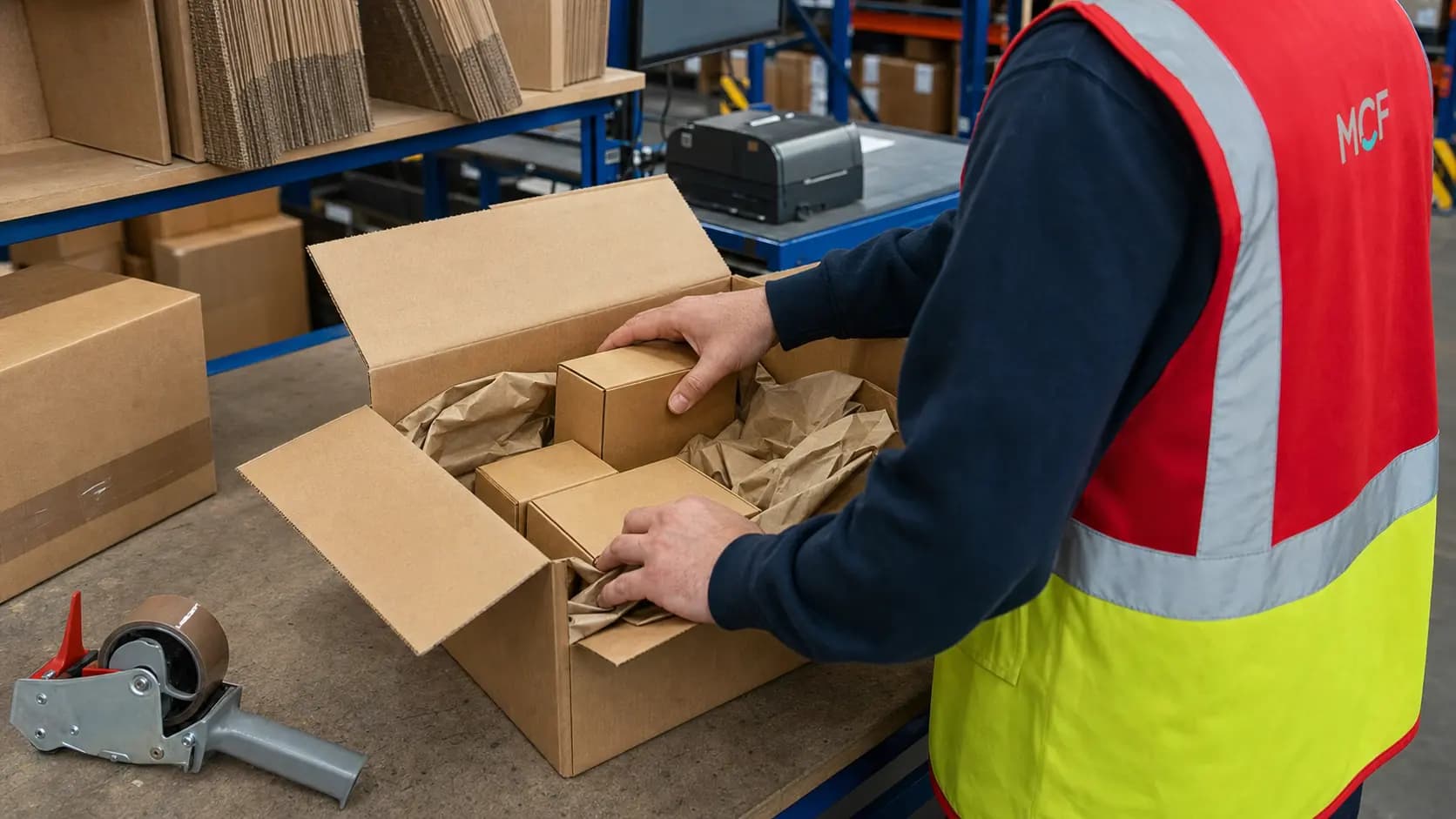
5. Packing
Products are picked. Now they need to reach the customer in perfect condition. The packing stage is where protection meets presentation.
Protection is the priority. Fragile items need appropriate cushioning. Heavy items need sturdy boxes. Liquids need leak-proof packaging. The goal is zero damage during transit, a challenge when packages may be handled by multiple carriers and travel hundreds of miles.
Efficiency reduces costs. Oversized packaging means higher shipping costs and more waste. Right-sized packaging protects products while keeping expenses in check.
Presentation creates impressions. The unboxing experience is a marketing opportunity. Branded boxes, tissue paper, thank-you notes, and free samples transform a transaction into an experience worth sharing.
Sustainability is increasingly important here, too. Customers notice excessive plastic, oversized boxes, and non-recyclable materials. Eco-friendly packaging options are good for your brand and the planet.
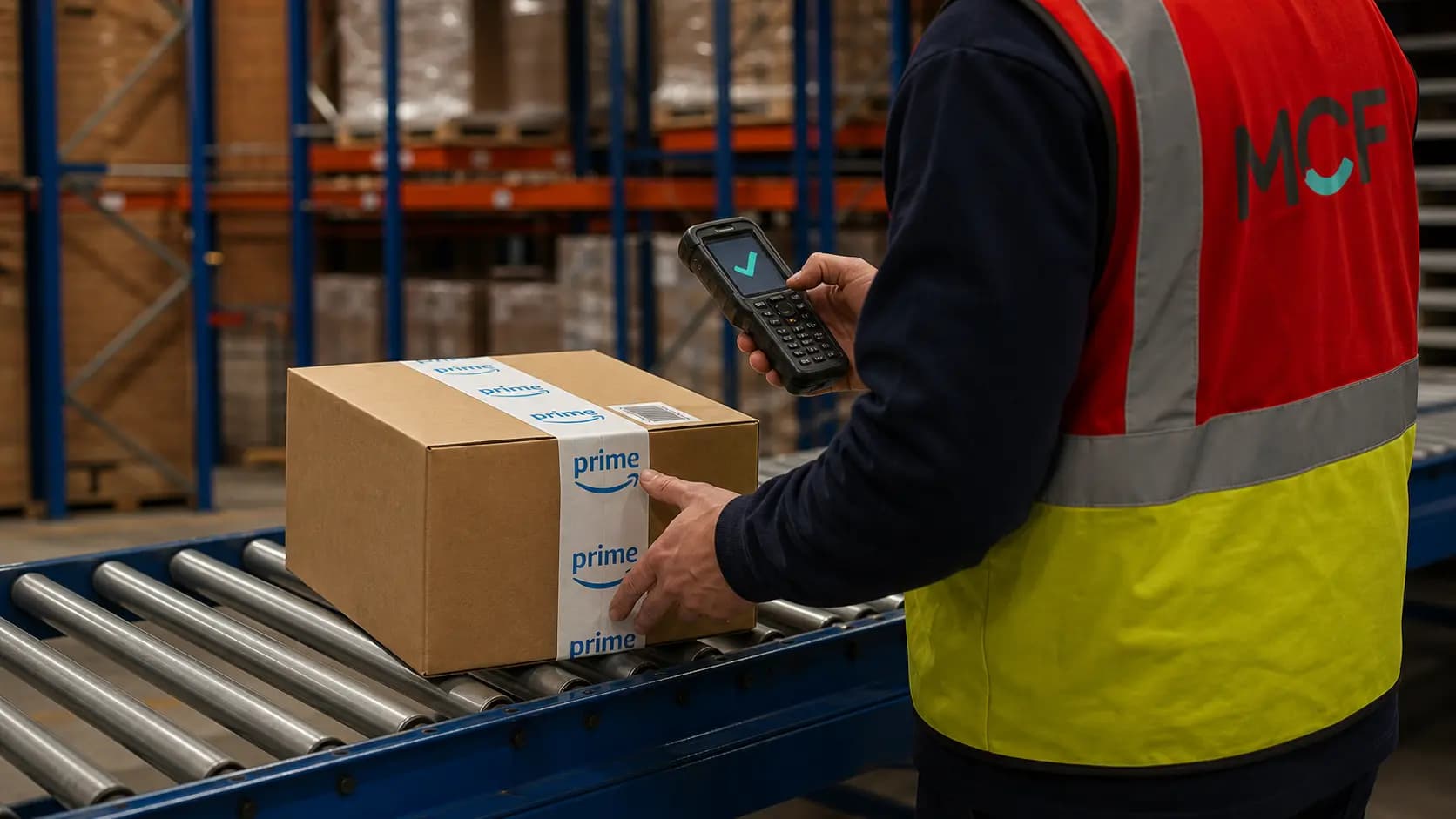
6. Shipping
The package is ready. Now it needs to travel from your fulfilment location to the customer's door, ideally quickly, reliably, and affordably.
Carrier selection impacts everything. Different couriers offer different strengths in coverage areas, delivery speeds, tracking capabilities, and pricing structures. The right carrier for a next-day delivery in London is rarely the right one for a bulk delivery to Inverness.
Shipping costs are a balancing act. Customers want free shipping. You need to maintain margins. Finding the sweet spot often means negotiating bulk rates, optimising package dimensions, and offering tiered shipping options at checkout.
Labelling and documentation must be flawless. Incorrect addresses, missing customs forms, and illegible labels create delays, returns to sender, and customer complaints. Automated labelling systems reduce human error.
For businesses using a 3PL like MCF, shipping becomes simpler. Fulfilment partners negotiate rates across multiple carriers (Royal Mail, DPD, etc), handle the logistics, and ensure packages leave on time, every time.
7. Tracking and Communication
The package is en route, but the customer experience is not over. Proactive communication builds trust and reduces anxiety.
Automated updates are expected. Order confirmation, dispatch notification, tracking link, out-for-delivery alert, delivery confirmation: each touchpoint reassures the customer that everything is on track.
Real-time package tracking is standard. Customers want to see exactly where their package is. The more visibility you provide, the fewer update enquiries you will receive.
Exception handling matters. When things go wrong, such as delayed shipments, failed delivery attempts, or address issues, customers need to know immediately. Silence breeds frustration. Proactive communication demonstrates professionalism.
Smart businesses use this stage to strengthen relationships. A well-timed email with tracking details, care instructions, or complementary product suggestions turns logistics into marketing.
8. Delivery
The final mile. The package arrives at the customer's door, their chosen collection point, their workplace, or their neighbour's house.
Delivery flexibility is increasingly important. Not everyone is home during standard delivery hours. Options like evening delivery, weekend slots, locker collection, and delivery to alternative addresses make a real difference.
Proof of delivery provides peace of mind. Photos, signatures, and GPS confirmation give you and the customer confidence that the package reached its destination.
First impressions are lasting impressions. The condition of the package, the presentation inside, and even the interaction with the delivery driver shape how customers feel about your brand.
Delivery is the moment of truth. Everything before this was preparation. Delivery is where promises are kept or broken.

9. Returns Processing
Returns are an inevitable part of eCommerce. How you handle them determines whether the customer becomes a refund or an exchange, and whether they come back at all.
Easy returns drive conversions. Customers are more likely to buy when they know returns processing is hassle-free. Complicated return processes create hesitation at checkout.
Speed matters here, too. The faster a return is processed and a refund issued, the better the customer experience. Delays create frustration and support enquiries.
Returns data is valuable. Why are products coming back? Sizing issues? Quality problems? Misleading product descriptions? Return reasons reveal opportunities to improve your products and processes.
Efficient returns processing also means getting saleable inventory back into stock quickly. The longer a returned item sits in limbo, the longer it is tied-up capital you cannot sell.
Finding Your Fulfilment Model
One of the biggest decisions in eCommerce is who handles fulfilment. There is no universal right answer. The best approach depends on your business stage, product type, order volumes, and growth ambitions.
Self-Fulfilment
Handling everything yourself. Storing stock in your garage, spare room, or small warehouse. Packing orders at the kitchen table. Queuing at the post office.
The advantages are clear:
- Complete control over the process
- Direct oversight of quality
- Lower costs at very small volumes
- Personal touch for every order
The limitations are equally clear:
- Time-consuming and physically demanding
- Difficult to scale as orders increase
- Diverts attention from growth activities
- Limited carrier options and negotiating power
Self-fulfilment works well for a very small eCommerce business, startups testing product-market fit, or brands where the personal touch is a genuine differentiator. But there is a ceiling. As order volumes grow, self-fulfilment becomes a bottleneck that holds back the business.

Third-Party Logistics (3PL)
Outsourcing to a specialist eCommerce fulfilment service. Your inventory sits in their warehouse. Their team picks, packs, and ships your orders. You focus on building and selling your product.
The advantages are significant:
- Scalability without capital investment in facilities and staff
- Expertise from professionals who do this all day, every day
- Technology access to advanced systems without building them yourself
- Negotiating power for better shipping rates through bulk volumes
- Flexibility to handle seasonal spikes without panic
The considerations:
- Less direct control over day-to-day operations
- Ongoing costs that scale with volume
- Dependency on a partner's performance
For growing businesses, 3PL is often the inflexion point between struggling with logistics and thriving despite them. It also helps to understand how fulfilment fits within eCommerce logistics as a whole. The cost of outsourcing is typically offset by efficiency gains, reduced errors, and the ability to focus on revenue-generating activities. Our guide on in-house fulfilment versus outsourcing covers the trade-offs in detail.
Hybrid Fulfilment
Perhaps you fulfil some products yourself, such as high-value items, personalised products, and local orders, while outsourcing the bulk to a 3PL.
Hybrid works well when:
- Certain products require special handling or personalisation
- You want to maintain a direct relationship with some customers
- Seasonal fluctuations require flexible capacity
- You are transitioning from self-fulfilment to 3PL
The complexity is higher with hybrid models. You are managing multiple fulfilment streams, coordinating inventory across locations, and maintaining systems that talk to each other. But for businesses where certain orders genuinely benefit from an in-house touch, hybrid provides flexibility.
Making the Right Choice
The right model depends on where you are and where you are going. Ask yourself:
- How many orders are you fulfilling monthly?
- How much time does fulfilment currently consume?
- What is your growth trajectory?
- Do your products require special handling?
- Where are your customers located?
- What is your tolerance for operational complexity?
Many successful brands start with self-fulfilment, transition to 3PL as they scale, and occasionally evolve to hybrid models as their needs become more sophisticated. The key is recognising when your current model is holding you back and having the confidence to evolve. Our guide on choosing the right fulfilment partner covers what to look for when you are ready to make the move.

Trends Shaping the Future of eCommerce Fulfilment
Customer expectations, technology capabilities, and market dynamics are constantly evolving. Here is what is shaping the future.
The Need for Speed
Same-day and next-day delivery have moved from a competitive advantage to a baseline expectation. In urban areas, customers increasingly expect delivery within hours, not days. This puts pressure on fulfilment operations to process orders faster, pick more accurately, and ship more efficiently. It also drives demand for strategically located fulfilment centres closer to population centres.
Sustainability as Standard
Eco-conscious consumers are scrutinising packaging, questioning delivery methods, and rewarding brands that prioritise sustainability. This means rethinking packaging materials, right-sizing boxes to reduce waste, consolidating shipments where possible, and partnering with carriers who offer lower-carbon delivery options. Sustainability is increasingly central to purchase decisions, particularly among younger consumers.
Technology and Automation
AI, robotics, and advanced software are transforming fulfilment operations. Automated picking systems reduce errors. Predictive analytics optimise inventory placement. Machine learning improves demand forecasting. Businesses that embrace technology gain efficiency advantages. Those that do not risk falling behind competitors who can fulfil faster, cheaper, and more accurately.
Multi-Channel Complexity
Customers buy through multiple sales channels: your website, Amazon, eBay, TikTok Shop, Instagram, and other marketplaces. Each channel has its own requirements, integrations, and customer expectations. Successful fulfilment operations need to handle multi-channel complexity seamlessly, processing orders from everywhere, maintaining accurate inventory across platforms, and delivering consistent experiences regardless of where the customer bought.
International Expansion
The world is increasingly your market. But cross-border fulfilment brings complexity: customs documentation, duties and taxes, longer transit times, and returns management. Brands looking to expand internationally need fulfilment partners with global expertise, understanding regulations, managing compliance, and providing local delivery experiences that meet customer expectations on the ground.
Why Partner with MCF?
Choosing a fulfilment partner is a significant decision. You are entrusting your inventory, your customer experience, and your brand reputation to another organisation. Here is what makes MCF different:
Years of expertise serving leading retail brands. We have refined our processes, learned from challenges, and built systems that deliver consistency at scale.
Scalable infrastructure that grows with you. Seasonal spikes, viral moments, steady growth: our facilities and team flex to meet demand without compromising quality.
Technology integration that connects seamlessly to your eCommerce platforms, including Shopify, WooCommerce, and others. Real-time inventory visibility, automated order processing, and transparent tracking keep you and your customers informed.
Tailored fulfilment services because no two businesses are identical. We understand your products, your customers, and your goals, then build an approach that delivers.
UK and global capabilities through our eCommerce logistics network for brands thinking beyond borders. Local expertise meets international reach, helping you scale efficiently into new markets.
Customer-centred culture where every order represents your brand. We deliver experiences that drive loyalty and repeat purchases.
When you partner with MCF, you gain a strategic partner invested in your growth.

Take the Next Step
Fulfilment can feel like a solved problem until it is not. Until orders spike and you cannot keep up. Until picking errors create a wave of returns. Until customers start leaving reviews about slow shipping.
The brands that win in eCommerce treat fulfilment as a growth lever. They invest in processes and partnerships that turn logistics into a competitive advantage. If your current fulfilment approach is limiting your ability to scale, it is time to explore alternatives.
Get a FREE quote from MCF and discover what seamless fulfilment could mean for your business. Let's turn logistics from a challenge into a catalyst for growth.