eCommerce Logistics vs Fulfilment: What's the Difference
If you have ever searched for help with your eCommerce operations, you have probably come across the terms logistics and fulfilment used interchangeably.
But they are not the same thing, and understanding the difference could have a real impact on how you grow your business, manage your costs, and choose the right partner.
This article breaks down exactly what eCommerce logistics means, and why getting clarity on both gives you a genuine commercial advantage.
What is eCommerce logistics?
eCommerce logistics is the entire supply chain that moves your products from the point of manufacture or purchase to your end customer, and back again if they choose to return.
Every step, handoff and process involved in getting your stock from A to B falls under the logistics umbrella. And that includes what happens before your products are ever sold, during the fulfilment process, and after delivery.

eCommerce logistics typically covers five key areas:
Inbound freight and receiving
Before you can sell anything, your products need to get to a warehouse. Inbound freight covers the transportation of goods from your supplier or manufacturer to your storage facility, whether that is a short domestic journey or a complex international shipment.
It also includes the process of receiving those goods, checking them in, and confirming stock levels are accurate. Poor inbound processes lead to inventory issues down the line, so getting this right matters more than many businesses realise.
Warehousing and inventory management
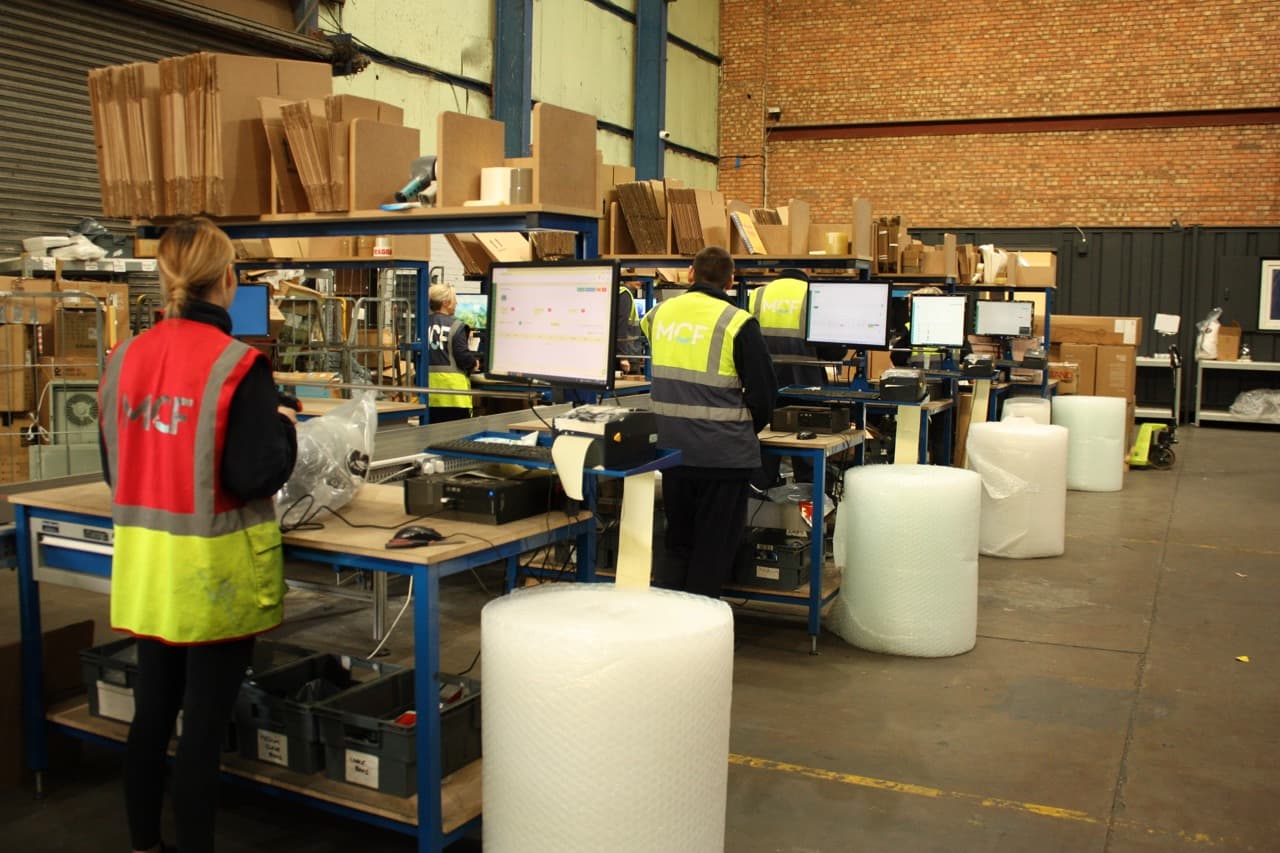
Once your stock arrives, it needs to be stored effectively. Good warehousing is about organisation and accuracy, so products need to be stored in a way that makes them easy to locate, quick to pick, and simple to audit.
Inventory management sits alongside this, keeping a live, accurate count of what you have in stock at any given moment. Overselling, stockouts, and costly write-offs are the result of weak inventory management. And they hurt both your reputation and your margin.

Order fulfilment
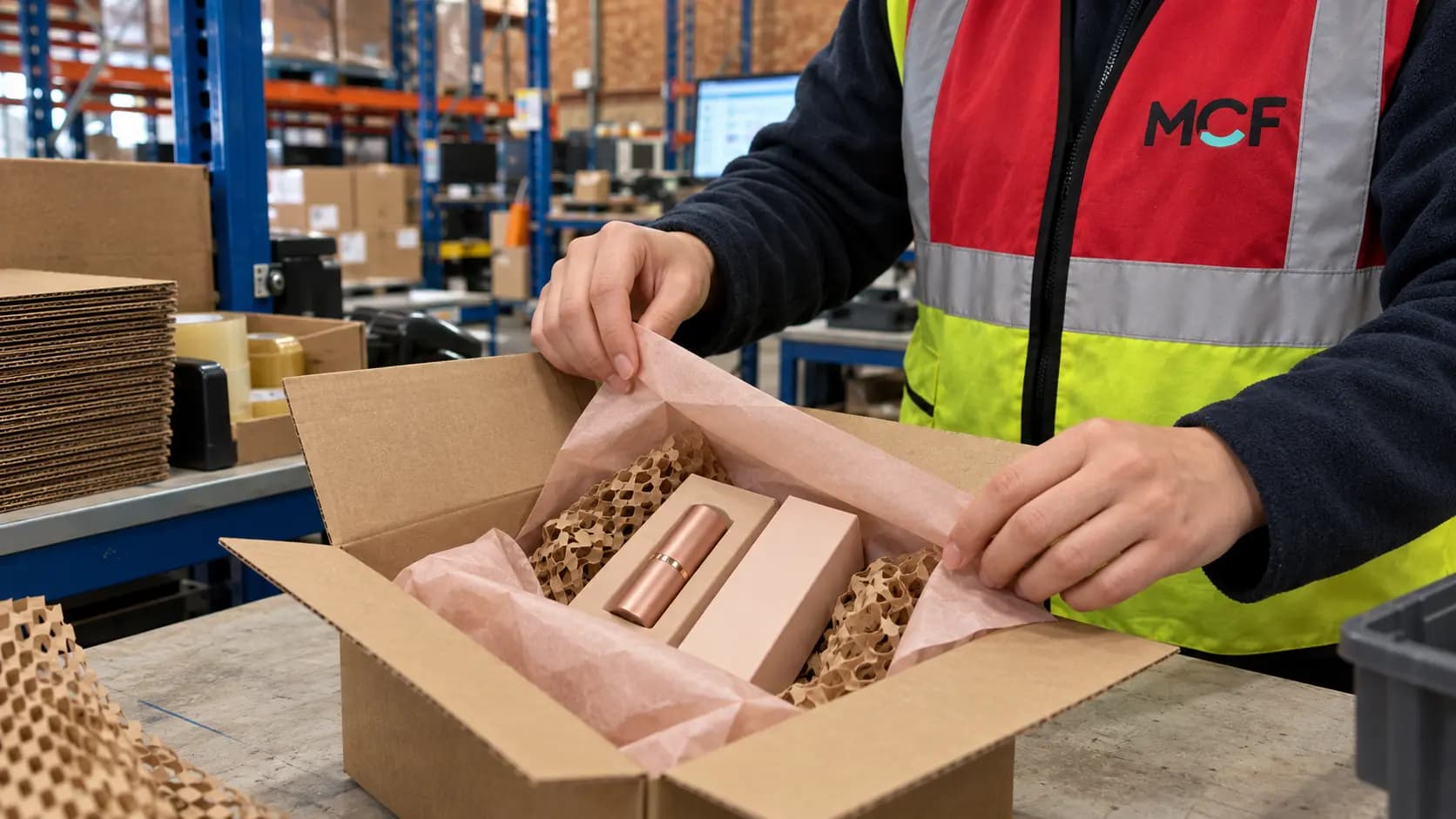
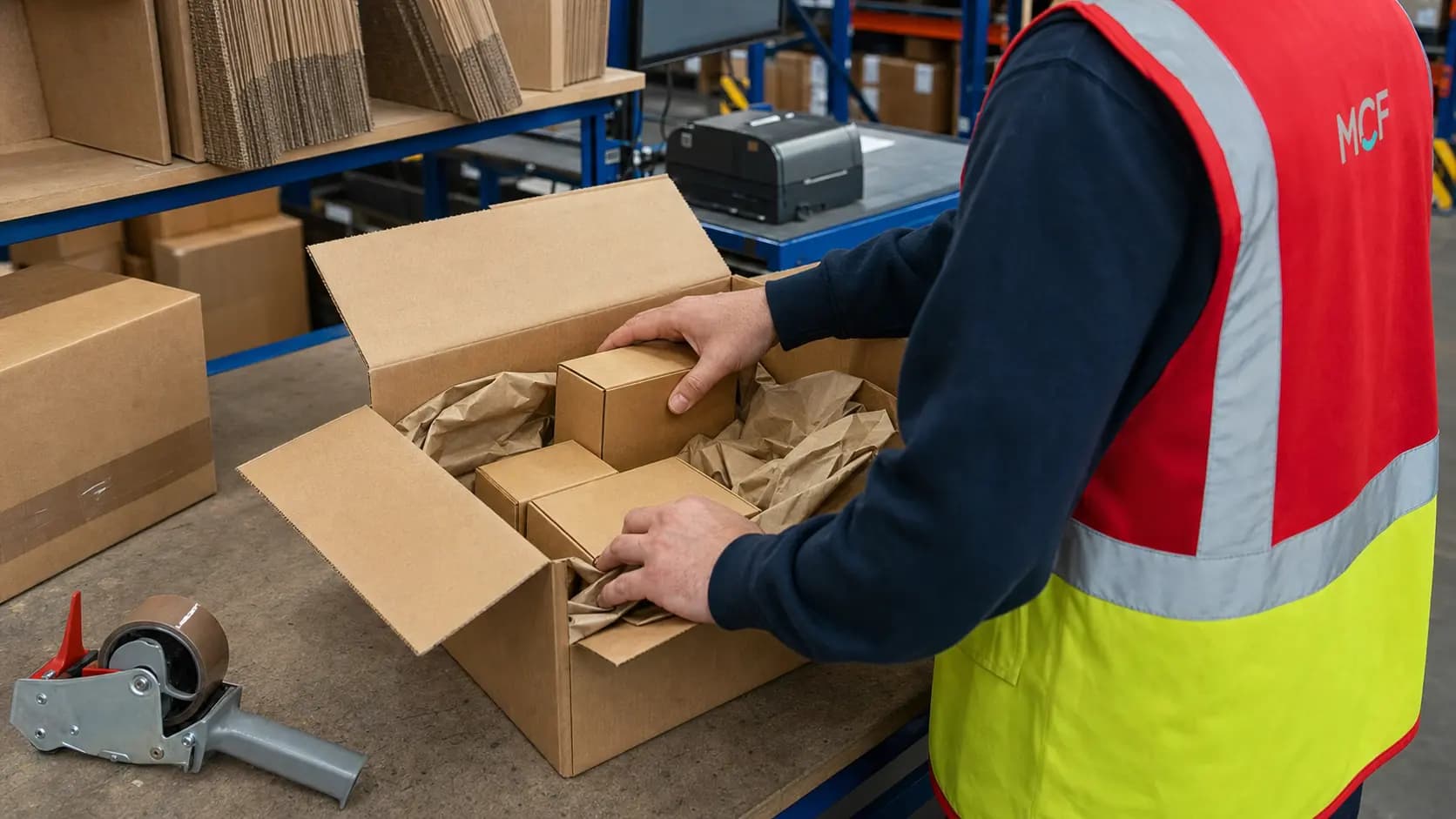
Order fulfilment is the process of picking, packing, and dispatching individual customer orders. It is the heart of your eCommerce business, and it is where your brand promise is delivered, or broken.
Last mile delivery
Last mile refers to the final leg of the journey, from the distribution centre or warehouse to the customer's door. It is called the last mile because it is the most complex and most expensive part of the delivery chain. Route optimisation, courier selection, delivery speed, and communication all play a role.
Customers do not see any of the work that happens before this point. The last mile is their entire delivery experience, which is why it carries so much weight for customer satisfaction and repeat purchase rates.
Returns management
Also known as reverse logistics, this is the process of handling returned products. A customer requests a return, the item travels back through the supply chain, and then it needs to be inspected, restocked, written off, or disposed of, depending on its condition.
Returns are growing, with nearly one in five online orders now returned, and that trend shows no signs of slowing. An efficient returns process protects your margins and keeps your customers happy enough to buy from you again.
Together, these five areas make up the full scope of eCommerce logistics. It is a connected system, and a weakness in any one area affects the performance of the whole.
What is eCommerce fulfilment?
eCommerce fulfilment is one component of the broader logistics chain. Specifically, it refers to the process of receiving, processing, and delivering individual customer orders.
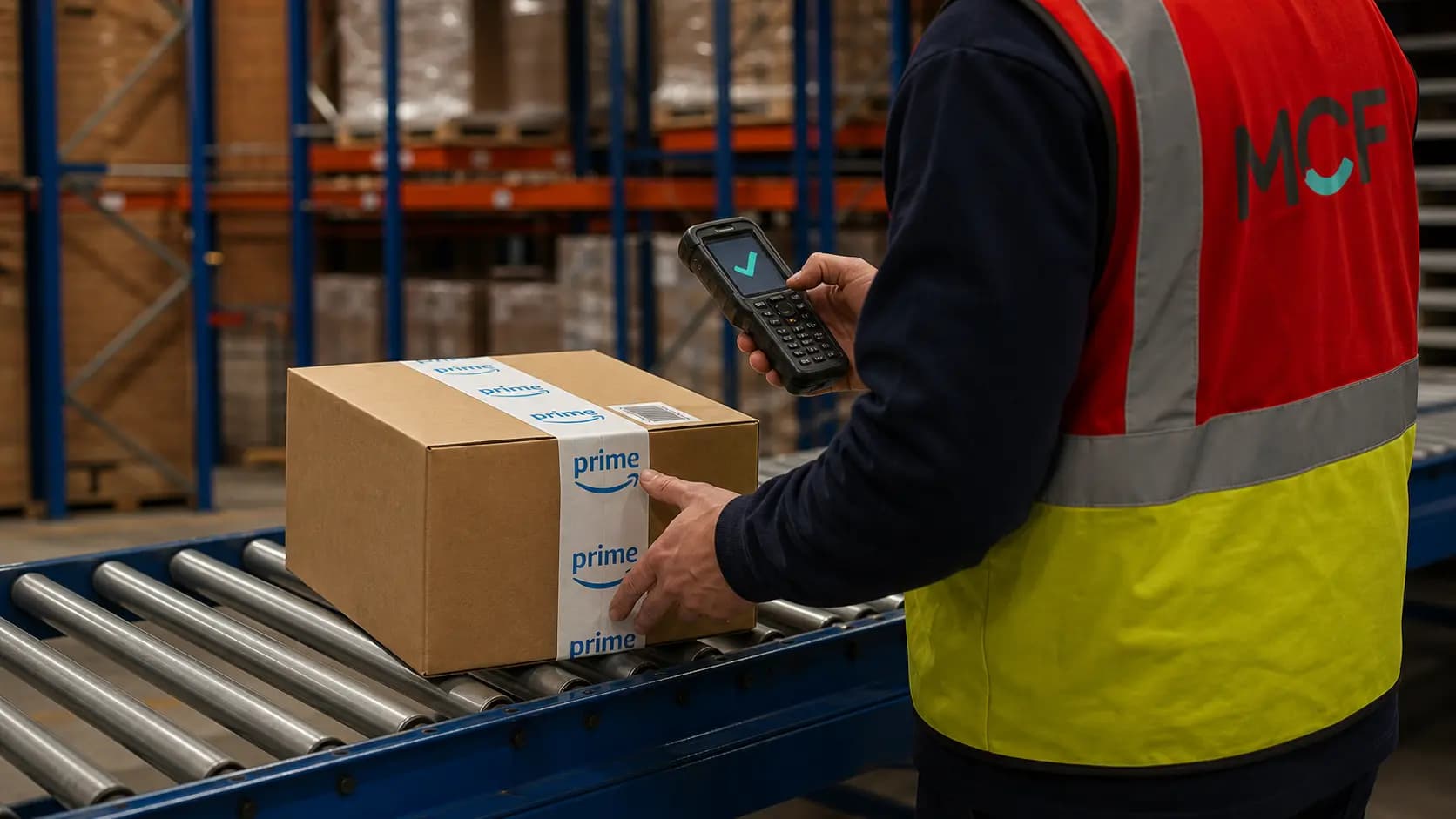
When a customer places an order on your website, fulfilment is everything that happens next. The order is received, the item is located in the warehouse, it is picked from the shelf, packed to the required standard, labelled, and handed over to a courier for delivery.
A good fulfilment operation is fast, accurate, and scalable. It gets the right product to the right customer in the right condition, on time, every time. It handles peaks in demand without breaking down. It integrates cleanly with your eCommerce platform so orders flow through automatically. And it keeps error rates low enough that your customer service team is not spending half their day dealing with complaints.

Why the distinction matters
So why does it matter whether you call something logistics or fulfilment?
Because when you are making decisions about your business, especially outsourcing decisions, investing in technology, or hiring a third-party provider, you need to know exactly what you are buying.
If you approach a provider asking for help with fulfilment, you might get a service that covers picking, packing, and dispatch. That is useful. But if your real problem is that your inbound freight is inconsistent, your inventory counts are unreliable, or your returns process is costing you a fortune, then a fulfilment-only solution will not fix it.
Understanding logistics as the whole picture helps you diagnose where the problems actually are. And it helps you ask the right questions when you are choosing a fulfilment partner.
How eCommerce logistics affects your bottom line
Every stage of the logistics chain has a direct cost attached to it. Inbound freight, storage fees, labour for picking and packing, courier rates, and returns processing all add up. For many eCommerce businesses, logistics costs represent the single largest operational expense after the cost of goods.
Warehouse costs in particular are easy to underestimate. If you are managing your own storage, you are paying for space whether you are using it or not. Seasonal peaks mean you need more space than you need for most of the year. Without the ability to flex that capacity up and down, you are either paying for space or struggling to cope when demand spikes.
Courier costs are the other major variable. The rates you can negotiate as an individual business are almost always higher than those available through a large-scale fulfilment provider with significant shipping volume. Accessing those preferential rates through a third-party logistics or fulfilment partner can make a meaningful difference to your per-order cost.
The last mile is where costs balloon fastest. Failed deliveries, redelivery attempts, customer service contacts, and compensation claims all add hidden costs to the simple act of getting a parcel from a warehouse to a front door. Choosing courier partners carefully, optimising routes, and communicating proactively with customers all reduce that hidden cost.
Common eCommerce logistics challenges
Running a smooth logistics operation is one of the hardest things about scaling an eCommerce business. Here are the challenges that come up most consistently.
Managing inventory across multiple channels
Selling on your own website, Amazon, eBay, and other marketplaces simultaneously creates a real inventory management headache. If your stock data is not synchronised in real time across every channel, you risk overselling, which leads to cancellations, upset customers, and damage to your seller ratings.
Coping with seasonal demand
Most eCommerce businesses have periods of significantly higher demand, whether that is Black Friday, Christmas, summer, or a product-specific peak. Your logistics operation needs to scale up quickly and scale back down without leaving you with expensive unused capacity on either side.

Meeting marketplace performance standards
Amazon, eBay, and other major marketplaces set strict metrics around dispatch times, cancellation rates, and delivery performance. Falling below these thresholds can suppress your listings or, in serious cases, suspend your account. Meeting these standards consistently requires a logistics operation that runs with precision.
International expansion
Moving into new markets is one of the most effective ways to grow revenue, but it introduces significant logistics complexity. Customs clearance, international shipping rates, local delivery networks, and cross-border returns all require specialist knowledge and the right operational infrastructure.
Returns volumes
As mentioned earlier, returns are growing and unpredictable. A returns spike after Christmas, a viral product review, or a batch quality issue can overwhelm a returns process that is not built to flex.
The case for outsourcing eCommerce logistics
For businesses that have outgrown their in-house operation, or that want to scale without building out costly internal infrastructure, outsourcing to a third-party logistics provider makes strong commercial sense.
A 3PL partner takes responsibility for warehousing, fulfilment, last mile, and returns. They bring the technology, the space, the courier relationships, and the expertise. You bring the products and the orders. The result is a leaner, faster, more scalable operation than most businesses could build on their own.
There are other benefits beyond the obvious cost savings. A good 3PL partner brings capability that takes years to build in-house: API integrations with every major marketplace and eCommerce platform, established relationships with the best courier networks, and proven processes for handling returns, managing inventory, and meeting the compliance requirements of major vendors.
57% of eCommerce businesses outsource their fulfilment process. That is your competitors already taking advantage of eCommerce logistics partners to improve their customer experience and reduce fulfilment costs.

What to look for in an eCommerce logistics partner
Not all logistics and fulfilment providers are the same. When you are evaluating your options, these are the things that matter most.
Technology and integrations
Your logistics partner needs to connect cleanly with your eCommerce platform, marketplace accounts, and inventory management system. Real-time data flow between your sales channels and your fulfilment operation is non-negotiable at any meaningful scale.
Transparency and pricing
Hidden fees are a common complaint in the logistics industry. Look for a partner with clear, simple pricing that covers storage, pick and pack, shipping, and returns without unwelcome surprises on your invoice.
Scalability
Your logistics partner needs to grow with you. Can they handle a 3x increase in order volume during a peak period? Can they support your expansion into new markets? Can they take on new product lines without disruption? Ask these questions before you sign.
Service levels and accuracy
A 99%+ shipping rate and minimal pick errors are the standard. Ask for performance data and understand how issues are identified, reported, and resolved when things do go wrong.
Returns capability
Returns handling is often an afterthought in logistics conversations. A responsive, well-managed returns process protects your customer relationships and keeps your inventory accurate. Make sure your partner has a proven system, not just a vague promise.
eCommerce logistics and fulfilment under one roof with MCF
At MCF, we understand that logistics and fulfilment are two sides of the same coin. Our service covers the full picture, from inbound goods receipt and inventory management through to order fulfilment, last mile delivery, and returns handling.
We work with eCommerce businesses of all sizes across the UK, from pure play start-ups to established multi-channel retailers. Our API integrations cover all major platforms and marketplaces, so you can reach every audience. Our warehouse has over 12,000 pallet spaces, and our competitive courier rates give you access to pricing you could not achieve on your own.
MCF is here to help you grow. If your logistics operation is holding you back, or if you are building an eCommerce business and want to get the foundations right from day one, we would love to talk.
Get a free quote today with transparent prices and no minimum spend. Let's make your logistics a competitive advantage. Get in touch.