Seller Fulfilled Prime UK: The Complete 2026 Guide
Published
What Is Seller Fulfilled Prime, and How Does It Compare to FBA and FBM?
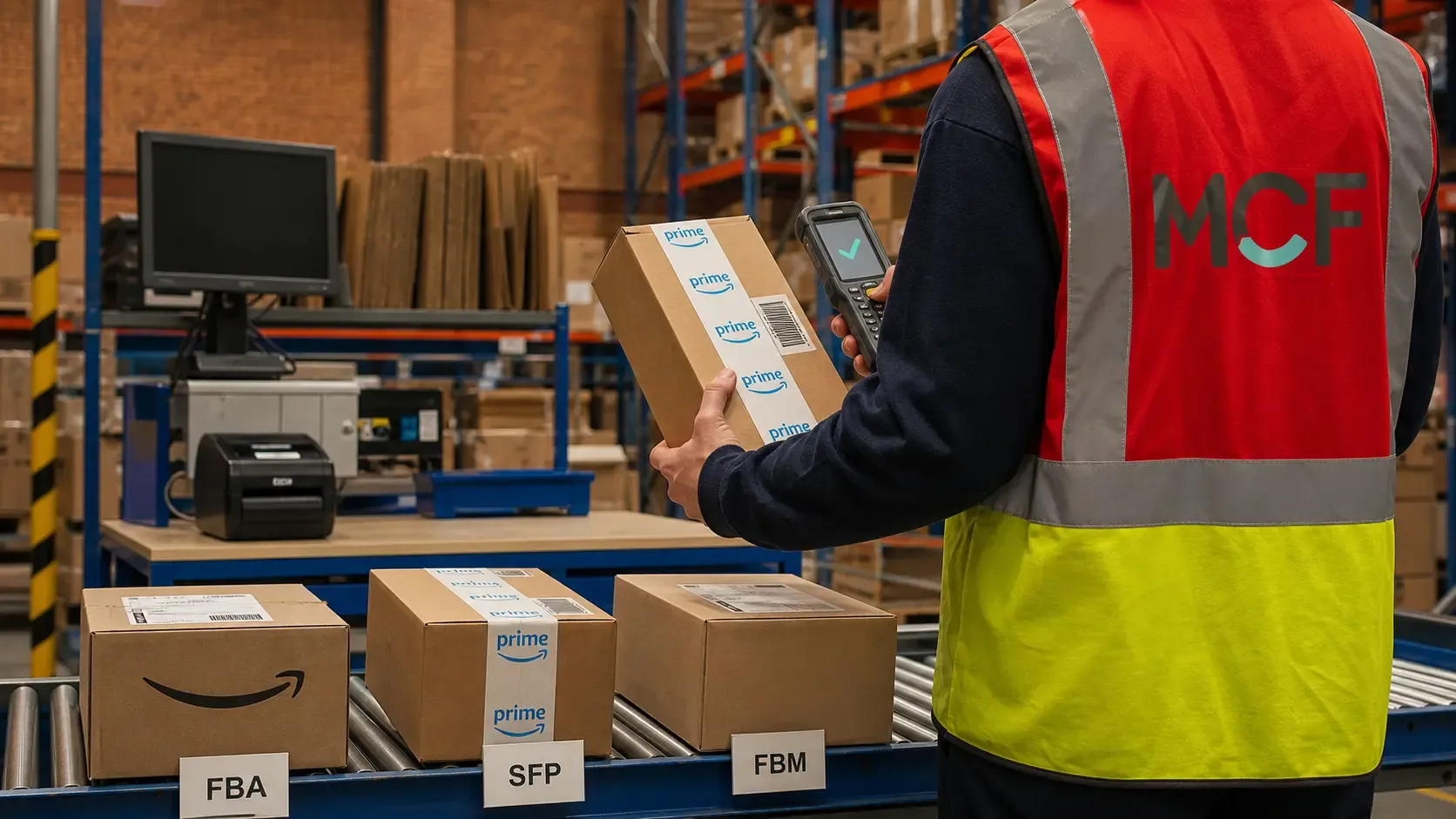
If you sell on Amazon, you have three main fulfilment routes. Understanding the difference is the foundation of a smart fulfilment strategy.
Fulfilment by Amazon (FBA) means you send your inventory to Amazon's warehouses and they pick, pack, and ship every order. You get the Prime badge automatically, but you pay storage fees, fulfilment fees, and long-term storage fees - and you lose direct control over your stock.
Fulfilment by Merchant (FBM) means you ship orders yourself, from your own warehouse or a third-party logistics provider. You keep full control, but your listings won't display the Prime badge unless you qualify for SFP.
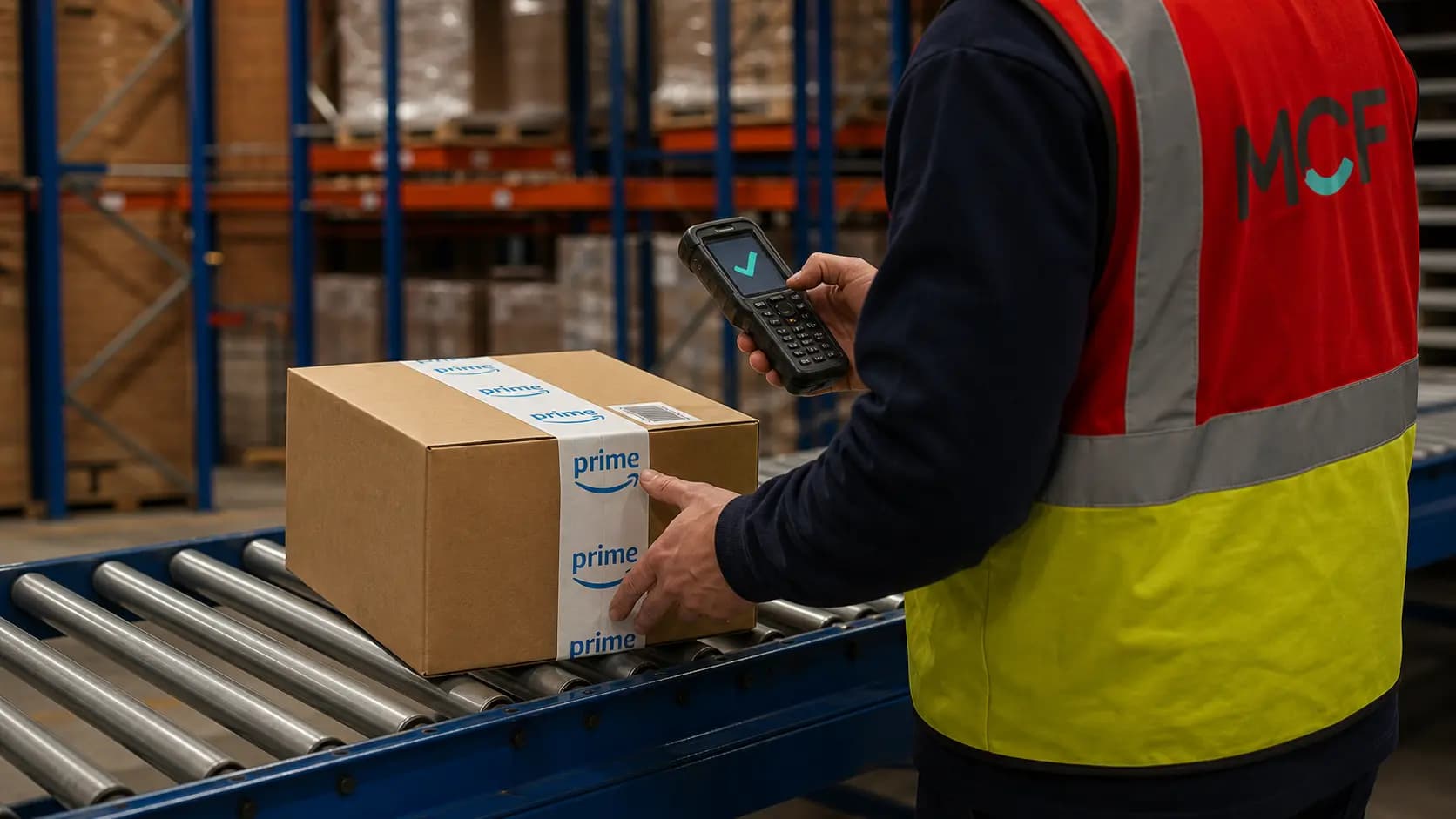
Seller Fulfilled Prime (SFP) sits between the two. You fulfil orders from your own warehouse, or through an SFP fulfilment provider like MCF, but your listings display the Prime badge. You get the visibility and trust of Prime without surrendering your inventory to Amazon's network.
Our team recommends SFP for items that are larger, low-margin, hazardous, or slow-moving - anything where FBA fees would eat into your profits.
It's also the right choice if you want to keep your inventory in one place and sell freely across multiple channels. If you want the three models set side by side before you read on, we have covered how FBA, SFP and FBM compare in a separate article.
What Amazon Expects in 2026
To earn and keep your Prime badge, Amazon holds SFP sellers to strict performance and compliance standards.
These are hard targets. Fall below them, and you risk losing the badge.
On-Time Shipment Rate: 99% or above
Orders must be shipped and receive their first carrier scan on the same day they are placed, for orders placed before your dispatch cut-off time.
Amazon measures this over a rolling period, and consistent misses will trigger a review.
Cancellation Rate: Under 0.5%
If you cancel an order because you can't fulfil it - due to stock issues or operational failures - that counts against you.
Keeping this below 0.5% requires tight inventory management and reliable stock visibility.
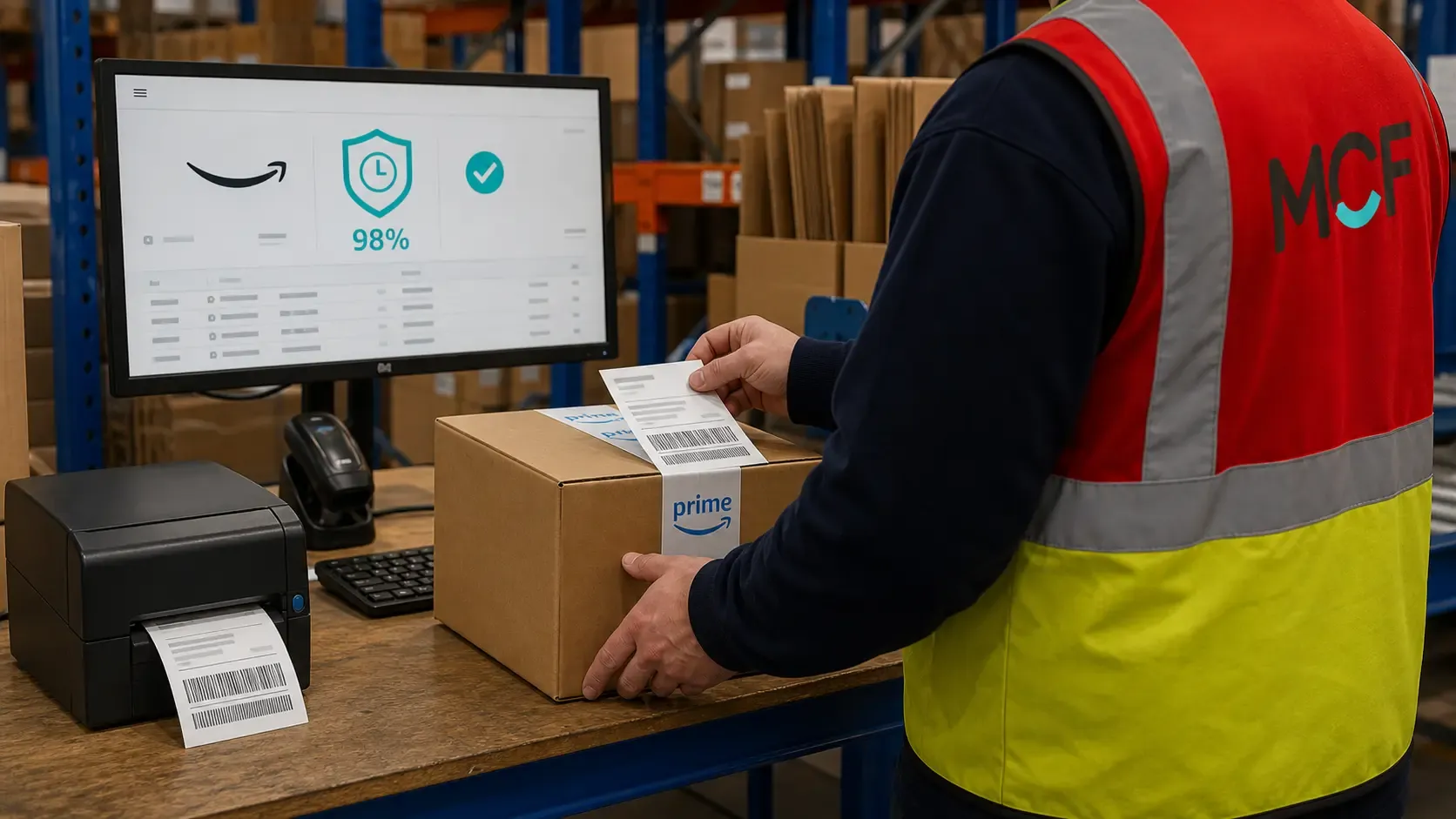
Amazon Buy Shipping: 98% of orders
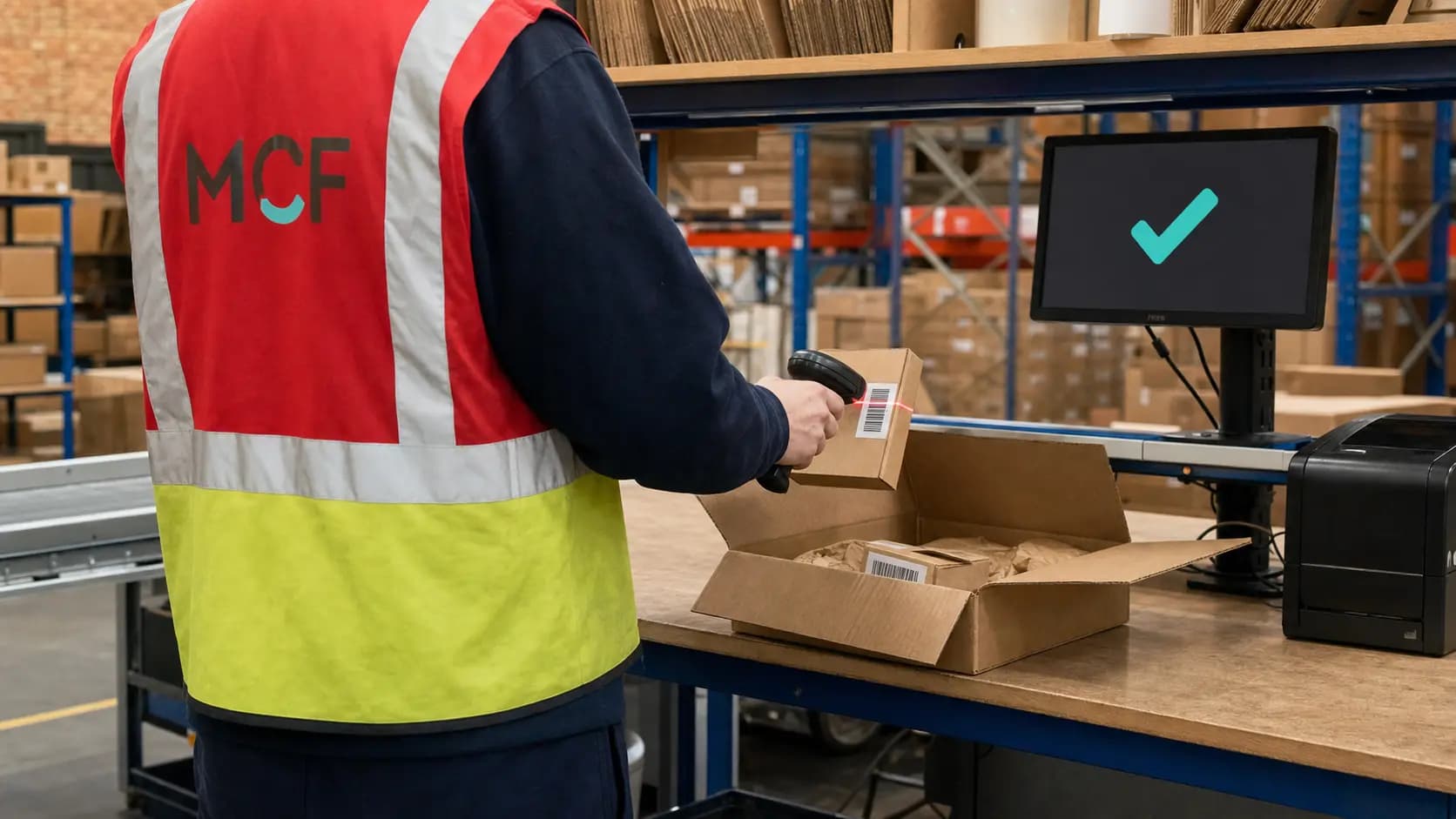
Amazon requires that at least 98% of your Prime labels be purchased through Amazon Buy Shipping.
This is how Amazon verifies you are using an approved carrier and protects your account from buyer claims related to delivery.
Valid Tracking Rate: 99% or above
Every order needs a valid tracking number uploaded before the estimated ship date. Carriers must provide tracking data that Amazon can verify.
Trial Period
Before you earn the full Prime badge, Amazon puts new SFP sellers through a trial period.
During this time, your listings are not yet Prime-eligible, but Amazon evaluates your ability to meet the performance targets above.
Once you pass the trial, the Prime badge is applied to your qualifying listings.
There is no fixed length to the trial - Amazon decides based on your performance data.
The best way to pass quickly is to ensure your systems, carrier relationships, and inventory management are all in place before you start.
The 2026 OTDR Protection Rules Explained
One of the most important updates to SFP in recent years is the On-Time Delivery Rate (OTDR) protection introduced through Amazon Buy Shipping.
If a customer reports a late delivery and you purchased the label through Amazon Buy Shipping, Amazon absorbs the negative impact on your account.
The late delivery does not count against your Order Defect Rate (ODR).
Without it, a carrier running late through no fault of your own could damage your seller metrics. With OTDR protection, you are shielded as long as you bought the label correctly.
The rule reinforces why the 98% Amazon Buy Shipping requirement exists.
Missing this requirement leaves you exposed every time a carrier misses a delivery window.
At MCF, our technology integrates directly with Amazon Buy Shipping, purchasing labels on your account or ours and ensuring you consistently hit the 98% target.
How to Enrol in Seller Fulfilled Prime
Step 1: Check eligibility
You need a Professional selling account in good standing.
Your existing seller metrics will be reviewed. If you have existing performance issues, resolve them before applying.
Step 2: Apply for the SFP trial
In Seller Central, navigate to Fulfilment > Seller Fulfilled Prime and submit your application.
You will need to confirm your shipping capabilities and agree to Amazon's SFP terms, including the requirement to offer free next-day delivery to Prime members.
Step 3: Configure your shipping templates
Set up shipping templates in Seller Central that reflect your carrier options, cut-off times, and regions.
These templates tell Amazon what delivery speeds you can offer. They need to be accurate, because Amazon will hold you to them.
Step 4: Set up Amazon Buy Shipping
Integrate Amazon Buy Shipping into your dispatch process.
This can be done manually through Seller Central or via API for higher volumes. If you are working with a 3PL like MCF, this integration is handled for you.
Step 5: Complete the trial period
Begin fulfilling orders and demonstrate you can consistently hit the performance targets.
Amazon will monitor your on-time shipment rate, cancellation rate, and Buy Shipping usage throughout the trial.
Step 6: Earn the Prime badge
Once Amazon is satisfied with your performance, the Prime badge goes live on your eligible listings. Your visibility to Prime customers increases immediately.
Step 7: Maintain your performance
Ongoing monitoring of your metrics is essential, and Amazon can suspend SFP status if performance drops below targets.
Can I Use a 3PL for Seller Fulfilled Prime?
Yes, and for many sellers, it is the smartest way to run SFP.
Amazon's rules do not require you to ship from your own warehouse.
You can use a third-party logistics provider, provided they can meet Amazon's performance standards on your behalf. That means hitting 99% on-time shipment, keeping cancellations below 0.5%, and purchasing labels through Amazon Buy Shipping.

The challenge is finding a 3PL that genuinely specialises in SFP.
Many providers can handle standard ecommerce orders, but SFP has specific requirements around cut-off times, carrier compliance, Buy Shipping integration, and same-day dispatch that many are not set up for. If you are weighing up providers, our guide to choosing the right fulfilment partner sets out what to check before you sign, and it is worth understanding what a 3PL actually does day to day.
SFP is a core part of what MCF does rather than a service we handle on the side.
Our clients consistently achieve on-time shipment rates above 99%, and our cancellation rates sit below 0.5%.
Our technology integrates directly with Amazon Buy Shipping, and we manage approved carriers, including DPD, Royal Mail, Amazon Shipping, and Evri on your behalf.
Using a 3PL for SFP also means your inventory stays in one place.
You can fulfil SFP orders and orders from every other channel from the same stock. That is the flexibility FBA simply cannot give you, and it is a large part of the calculation when you compare running fulfilment in-house against outsourcing it.
If you are considering SFP but don't want to run your own warehouse operation, get in touch with MCF for a free quote.
Common SFP Mistakes (And How to Avoid Them)
Mistake 1: Applying before your operation is ready
Many sellers apply for SFP before they have reliable carrier integrations, cut-off procedures, or inventory management in place.
A poor trial period can delay your chances of getting the badge. Set everything up and test it before you apply.
Mistake 2: Not using Amazon Buy Shipping for every Prime order
Purchasing labels outside of Amazon Buy Shipping puts you below the 98% threshold and removes your OTDR protection.
Every Prime label must go through Buy Shipping. Build this into your process so it cannot be bypassed.
Mistake 3: Setting unrealistic cut-off times
To hit 99% on-time shipment, you need cut-off times that your operation can actually meet, every day.
Many sellers set ambitious same-day cut-offs and then struggle to maintain them under volume. It is better to start conservative and tighten your cut-off as your operation matures.
Mistake 4: Using unapproved carriers
Only Amazon-approved carriers can be used for SFP.
These currently include Amazon Shipping, DPD, Royal Mail, and Evri. Using any other carrier will cause compliance issues.
Always check the current approved carrier list in Seller Central.

Mistake 5: Poor inventory management causing cancellations
Overselling is the most common cause of cancellation rate issues. If your stock isn't synced accurately across all your sales channels, you risk taking Prime orders you can't fulfil.
A good 3PL or multi-channel system is essential, and it is worth understanding how inventory accuracy is maintained across channels before you commit to SFP volumes.
Mistake 6: Ignoring performance dashboards
Amazon gives you detailed performance data in Seller Central.
Many sellers only look at this when something goes wrong. Checking your SFP metrics regularly means you can catch problems before they escalate to badge suspension.
Mistake 7: Choosing the wrong items for SFP
SFP works best for larger, heavier, or higher-value items where Amazon's own fulfilment fees would be prohibitive.
Putting small, lightweight, fast-moving items into SFP when Amazon's network would be cheaper is a missed opportunity. Review your catalogue and route items to the right programme.
Why Choose MCF for Your SFP Solution?
MCF specialises in Seller Fulfilled Prime. We are not a general-purpose fulfilment company that handles SFP on the side - it is central to what we do, and our results reflect that.
Our on-time shipment rate consistently exceeds 99%. Our cancellation rates sit below 0.5%. Our Amazon Buy Shipping integration means we hit the 98% target on every account we manage.
We work with Amazon-approved carriers, like DPD, Royal Mail, Amazon Shipping, and Evri, and manage them to ensure consistent service levels.

Our pricing is clear and all-inclusive, with no binding contracts and no surprise fees.
You get a cost-per-unit for pick and pack, which makes your fulfilment margins simple to understand from day one. If you are budgeting, we have broken down how 3PL pricing works in more detail.
We also give you a web portal where you can view live orders across all your sales channels and manage inventory to prevent overselling.
If you are ready to raise your credibility with a Prime badge on your listings, or if you want to explore whether SFP is the right programme for your catalogue, get in touch for a free quote.