What is a Fulfilment Centre?
Where does it all go? Who packs it? How does it get there? And how do you scale when the orders start doubling every month?
This is where a fulfilment centre steps in.
If you've ever wondered what a fulfilment centre actually is, how fulfilment services work, and whether your business needs one, you're in the right place.
By the end of this guide, you'll have a clear picture of how fulfilment centres operate, why they matter, and how choosing the right one could be the single most important decision you make this year.
Let's go.
The Simple Answer
A fulfilment centre is a third-party warehouse facility that receives, stores, picks, packs, and ships your products to your customers on your behalf.
It's far more than a warehouse with shelves and a loading bay.
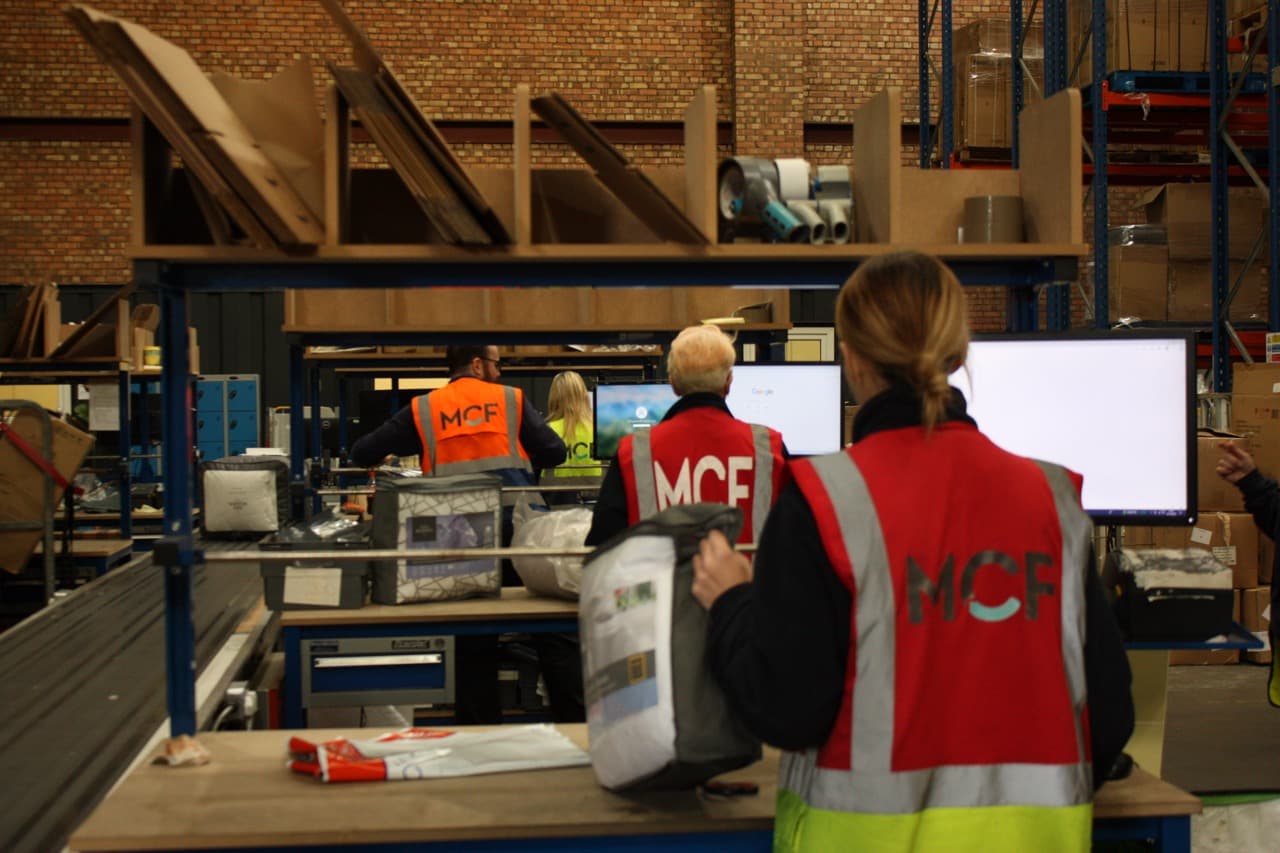
A modern fulfilment centre is a sophisticated operational hub.
It uses advanced technology, experienced teams, and integrated software to make sure your customer's order moves from purchase to doorstep as quickly and accurately as possible.
Think of it as your ecommerce logistics engine room.
You focus on growing the business. Then, when outsourcing fulfilment, the fulfilment centre handles everything that happens after the customer clicks "buy."

What's the difference between a fulfilment centre and a warehouse?
This trips up a lot of people.
Both involve storage. Both involve stock. But they serve very different purposes.
A warehouse is primarily a long-term storage facility. Goods sit there. They wait. Pallets stack up. That's largely it.
There's minimal activity on daily customer orders, and the focus is on bulk storage rather than dispatch speed.
A fulfilment centre, on the other hand, is a hive of constant activity.
Stock flows in. Orders flow out. Every single day. The whole operation is built around speed, accuracy, and getting your product into your customer's hands as fast as humanly possible.
The key difference is delivery.
If you're running an eCommerce business and you're still thinking in terms of "warehouse," it's time to upgrade your thinking.
Your customers don't care where your stock lives. They care that it arrives on time, undamaged, and exactly as described.
That's what a fulfilment centre is designed to guarantee.
How Does a Fulfilment Centre Actually Work?
Here's the step-by-step breakdown you've been waiting for.
Step 1: Inbound
It starts before a single order is placed.
Your products are shipped to the fulfilment centre in bulk. This might come directly from your manufacturer, your supplier, or from your own storage.
When the goods arrive, the fulfilment centre team gets to work immediately.
Every item is checked and logged. Quantity is confirmed. Quality is assessed. Any discrepancies are flagged straight away.
From there, the stock is entered into the Warehouse Management System (WMS). This is the backbone of the entire operation.
Once your stock is in the system, it becomes visible to the picking teams. Every unit is tracked. Every SKU is accounted for. Nothing disappears into a black hole.
This stage matters more than most people realise.
Poor inbound processes lead to inventory management errors. Inventory errors lead to picking the wrong item. Picking the wrong item leads to poor customer satisfaction. An angry customer leaves a damaging review.
It all starts here.

Step 2: Storage
Once logged, your products are stored in strategically allocated locations across the fulfilment centre floor.
This isn't random. It's calculated.
High-velocity items - the products that fly off the shelves - are positioned for quick access. Slower-moving stock is stored further away.
Everything is organised to minimise the time it takes a picker to retrieve an item.
Smart fulfilment centres use technology to manage these layouts dynamically. As demand patterns shift, so does the organisation of the floor.
This level of efficiency is something you simply cannot replicate at home or in a rented lock-up.
Step 3: Order Processing
A customer places an order on your website, your Amazon store, your TikTok Shop, wherever you sell.
That order immediately syncs with the fulfilment centre's system.
This is where integrated technology earns its keep.
Top fulfilment centres connect directly with your eCommerce platforms. The moment an order is placed, it's in the system. No manual input. No lag. No room for human error at this stage.
The order is confirmed, checked against available stock, and queued for fulfilment. All of this happens automatically, in seconds.
Step 4: Picking
Now the physical work begins.
A picker receives the order details and moves through the warehouse to retrieve the exact items needed. This might sound simple. It's not.
High-volume fulfilment centres are processing hundreds, sometimes thousands, of orders simultaneously. Without smart picking systems, errors multiply fast.
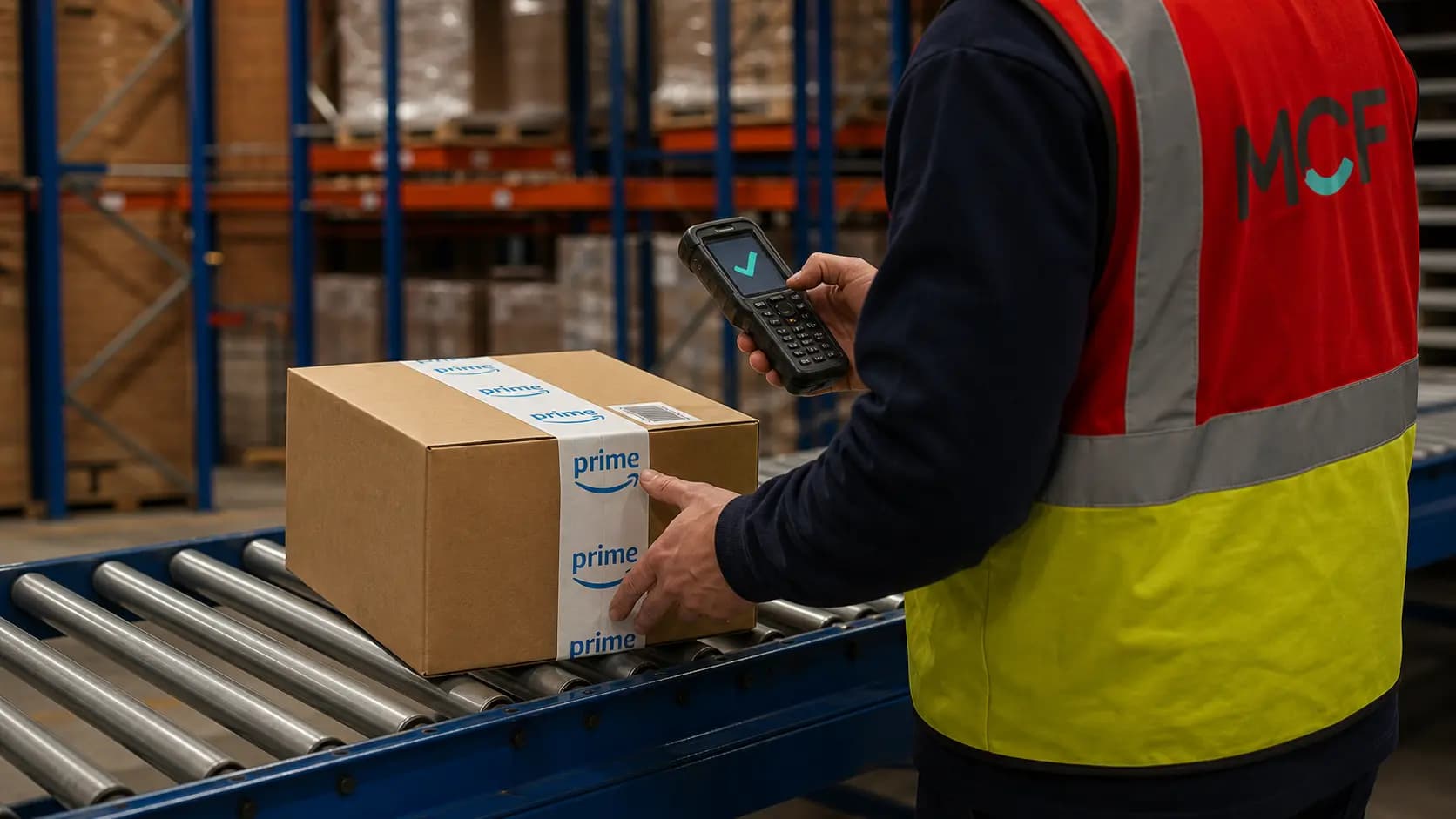
The best fulfilment centres use technology-guided picking, handheld scanners, barcode verification, and optimised pick routes.
This means the picker takes the most efficient path through the warehouse, retrieves the right item, and confirms it against the order before moving on.

Step 5: Packing
Packing is where many businesses underestimate the detail involved.
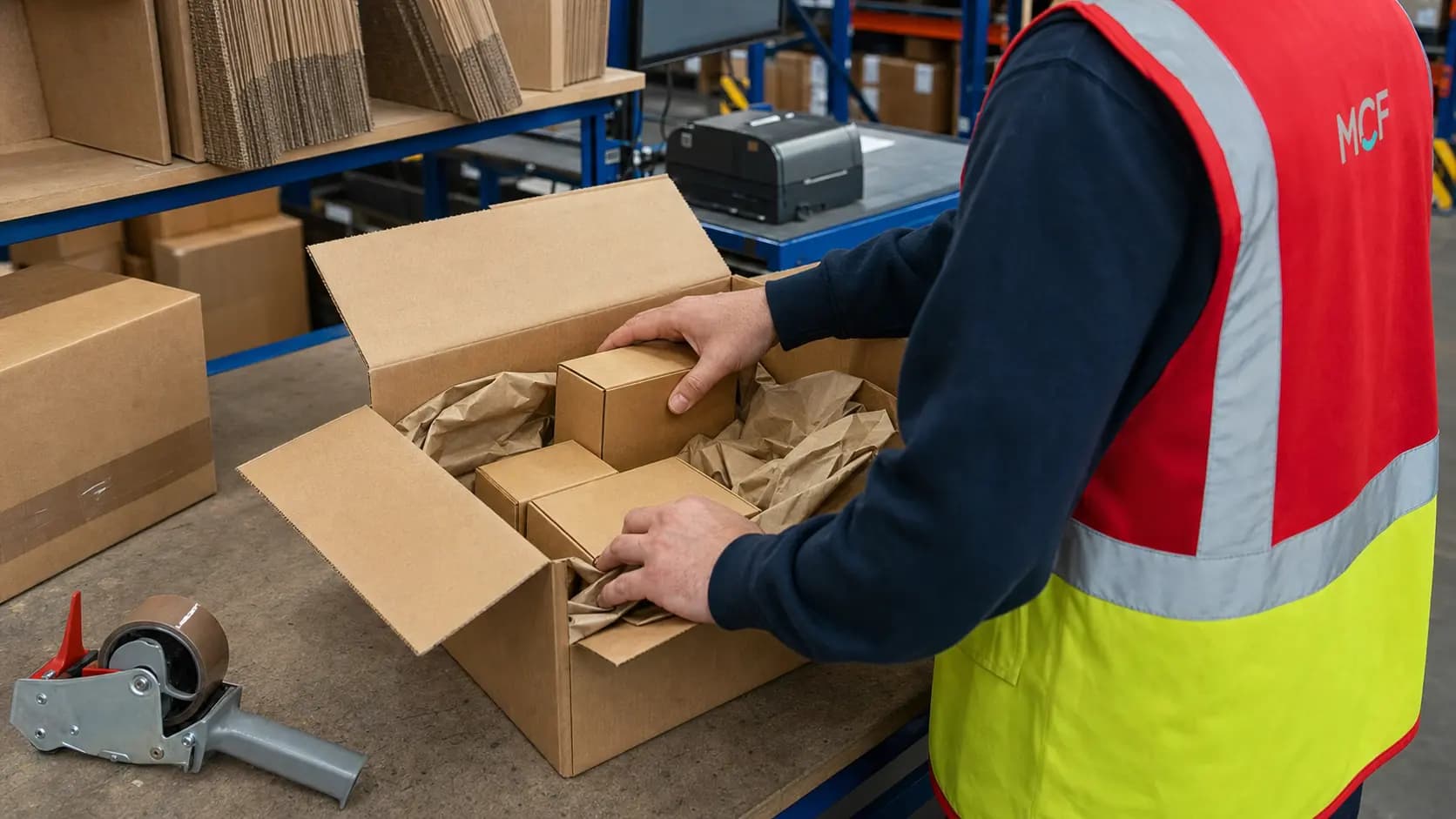
Packing decisions directly affect your costs, your brand perception, and the safety of your product in transit.
Weight, dimensions, and fragility all influence packaging choices.
The wrong packaging inflates your shipping costs. Inadequate packaging leads to damaged goods. Damaged goods lead to returns, refunds, and frustrated customers.
Great fulfilment centres consider all of this.
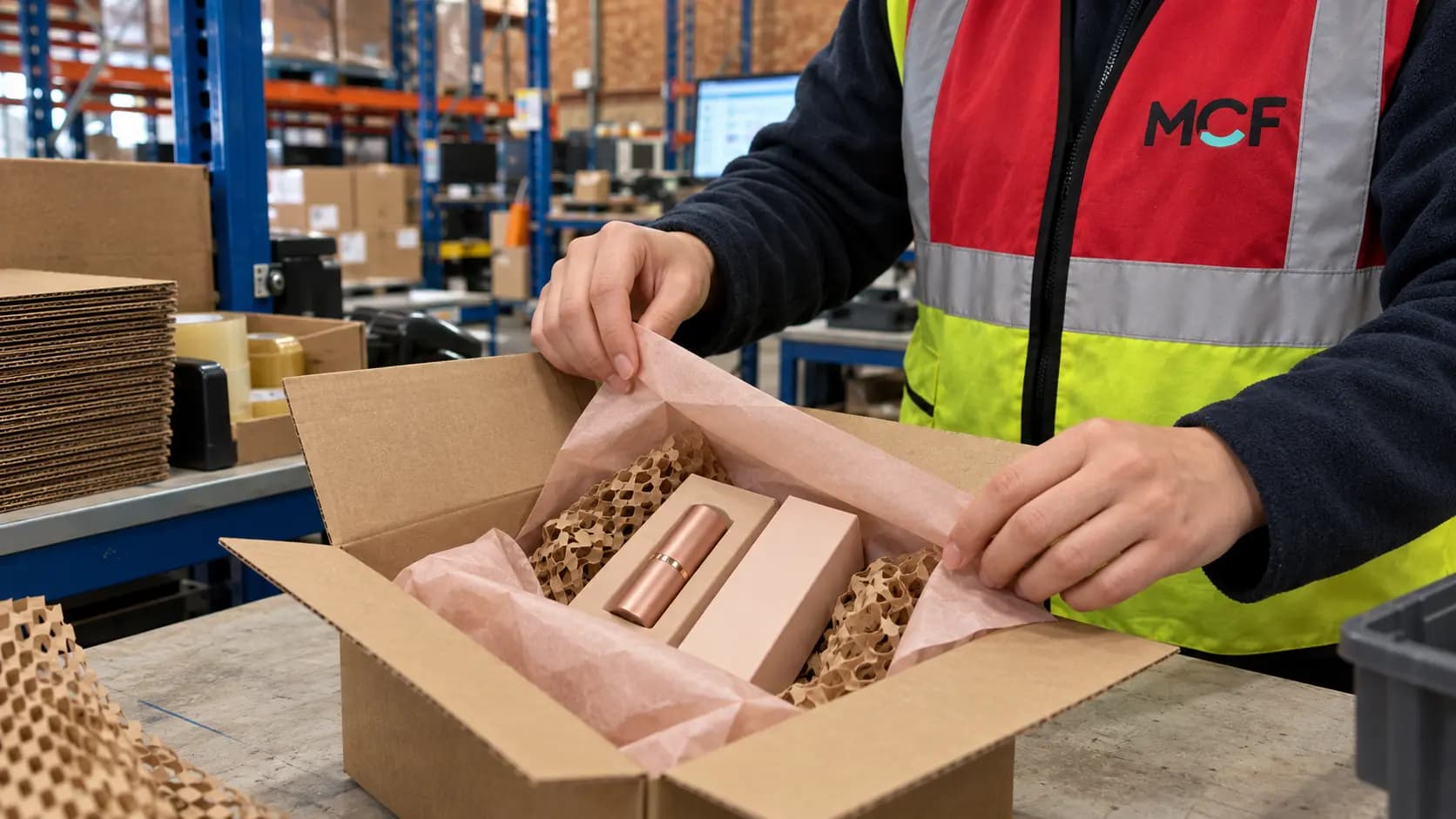
They choose protective materials appropriate to each product type. They minimise void fill waste. They ensure the package dimensions are optimised for courier rates.
And then there's the brand experience.
Do you want plain, functional packaging? That works perfectly well for many businesses.
But increasingly, brands are choosing custom branded packaging - a box that tells a story, that feels premium, that makes the unboxing experience something the customer wants to share.
Done well, this is one of the most powerful and underused marketing tools in eCommerce.
Sustainable packaging is another rising priority.
More customers than ever are making purchasing decisions based on a brand's environmental commitments.
Eco-friendly materials, minimal packaging waste, and recyclable options are becoming an expectation.
Your fulfilment partner should be able to support whichever direction you want to take.
Step 6: Shipping
The package is ready. Now it needs to move.
Orders are labelled and sorted for handover to the chosen courier.
The label contains everything the courier needs: recipient address, delivery service level, tracking reference, and return information.
Here's where partnering with a top fulfilment centre gives you a significant commercial advantage.
Fulfilment centres ship enormous volumes on behalf of multiple clients.
This gives them serious negotiating leverage with couriers. The result is bulk discount rates that you, as an individual business, would never be able to access on your own.
That cost saving goes straight back into your margins.
Beyond cost, fulfilment centres also offer courier flexibility. Standard delivery. Express. Next day. International shipping.
The right fulfilment partner has the relationships and the infrastructure to meet any delivery expectation your customers might have.
And in today's market, delivery expectations are high.
Next-day delivery is now an expectation. If your fulfilment process can't keep up with that expectation, your competitors will.

Step 7: Keeping the Customer updated
The order is on its way. But your job isn't done yet.
Today's customers expect transparency.
They want to know exactly where their order is, from the moment they place it to the moment it lands on their doorstep.
Live tracking. Automated shipping confirmations. Dispatch notifications. Estimated delivery windows.
Fulfilment centres with strong technology integrations feed real-time tracking data directly to your customers.
This reduces inbound customer service queries. It builds trust. It reinforces your brand's reliability.
Every automated update you send is a touchpoint that reminds your customer they made the right choice buying from you.
Step 8: Delivery and Returns
The package lands. The customer unwraps it. The experience is complete.
But it doesn't end there.
Returns management is an area many businesses overlook.
A clunky, frustrating returns process is one of the fastest ways to lose a customer.
A good fulfilment centre handles returns efficiently. Items are inspected on arrival. Salable stock is reintegrated into inventory. Damaged goods are flagged. Refunds are processed quickly.
The smoother your returns process, the more confident your customers will feel buying from you in the first place.
Who Needs a Fulfilment Centre?
Not everyone needs a fulfilment centre on day one.
If you're a brand-new startup packing ten orders a week from your kitchen table, you probably don't need one yet.
But what if fulfilment starts consuming your evenings and weekends?
Fulfilment centres are typically the right move when:
- You're processing consistent order volumes generally around 100–200 orders per month, though this varies by business.
- You're experiencing seasonal spikes that your current setup simply can't handle.
- You're expanding into new sales channels and need a system that integrates across all of them.
- You're looking to sell internationally and need a partner with the infrastructure and expertise to manage cross-border logistics.
- Fulfilment errors are rising - wrong items, late deliveries, damaged goods - and it's starting to affect your reviews and your reputation.
- You want your time back to focus on what you're actually good at: building the brand, driving sales, and creating products people love.
If more than two of those feel familiar, it's time to have a conversation.
Why a Fulfilment Centre Makes Commercial Sense
Let's talk numbers for a moment.
When you fulfil in-house, you're absorbing costs that aren't always visible on a spreadsheet. Your time. Your space. Your staff. Your packaging materials. Your courier rates. Your returns process.
Add it all up, and in-house fulfilment is often far more expensive than it appears.
Partnering with a fulfilment centre changes the equation.
You only pay for what you use. You gain access to negotiated courier rates you couldn't get on your own.
You eliminate the overhead of managing a warehouse, no lease, no equipment, no additional headcount.
More importantly, you gain scalability.
Peak trading season arrives. Orders triple. Under your old model, that's a crisis. With a fulfilment centre, it's business as usual. The infrastructure is already there. The team is already in place.
You scale up without panic, without throwing money at the problem, and without sacrificing delivery speed or accuracy.

Technology in modern fulfilment
You can't talk about fulfilment centres without talking about technology.
The best operations in the industry are powered by sophisticated Warehouse Management Systems that track every unit of stock in real time.
They integrate directly with your eCommerce platforms: Shopify, Amazon, eBay, WooCommerce, TikTok Shop, and more.
They automate order processing, generate picking routes, verify items at every stage of the process, and push live tracking data to your customers.
This is the infrastructure that keeps errors low and speed high.
Without it, you're relying on manual processes. And manual processes, at scale, fall apart.
When you're evaluating a fulfilment centre, technology should be one of your first questions.
How does their system integrate with yours? What visibility do you have over your inventory? How do they handle multi-channel sales? What does the customer communication flow look like?
These are business questions with direct impact on your customer experience and your reputation.
What to Look for in a Fulfilment Centre
Not all fulfilment centres are created equal.
Choosing the right partner is one of the most important operational decisions you'll make. Here's what to look for:
Accuracy rates. What is their pick and pack accuracy rate? Even a 99% accuracy rate sounds good until you're processing 10,000 orders a month and 100 of them are wrong.
Technology and integration. Can they plug seamlessly into your existing platforms? How much manual input will be required on your side?
Scalability. Can they grow with you? Will you outgrow their capacity? What happens during your peak season?
Transparency. Do you have real-time visibility over your stock levels? Can you see exactly what's happening with your inventory at any given moment?
Customer focus. Do they treat your orders as if they were their own? Every package they send carries your brand name, not theirs.
Experience. Have they worked with businesses like yours before? Do they understand your product type, your market, your customer expectations?
Location. Where are they based? Proximity to major courier hubs can meaningfully impact dispatch speed and delivery times.
Get these answers before you sign anything.
The MCF Difference
At MCF, we've spent years building a fulfilment operation that answers every one of those questions with confidence.
Our infrastructure is built for accuracy. Our technology integrates seamlessly with the platforms you already use. Our team understands what your brand represents - and we treat every order accordingly.
Whether you're processing hundreds of orders a month or scaling towards tens of thousands, our operation moves with you.
We understand the UK market inside out.
And when you're ready to expand internationally, we have the expertise and the cross-border relationships to make that happen without the usual complexity and cost.
You get a new growth partner.
Ready to Make Fulfilment Your Competitive Advantage?
Your product and your marketing will only take you so far. The businesses that win in the long term are the ones that deliver on their promises.
Don't let an expensive, time-consuming in-house operation hold back a brand that deserves to grow.
Get a FREE quote from MCF today and find out how we can transform your fulfilment from a bottleneck into your number one growth channel.